

A business plan is not a formality. For footwear entrepreneurs, it is the document that forces clarity on every decision that will determine whether your brand survives its first two years—from how much inventory to order to how you will price against competitors to when you will break even.
Yet most aspiring shoe brand founders either skip the business plan entirely or produce a vague, surface-level document that does not address the realities of footwear-specific economics: high upfront tooling costs, seasonal production cycles, complex supply chain logistics, and the margin math that separates profitable shoe brands from those that bleed cash on every pair sold.
This guide is written specifically for footwear startups. It walks you through every section your shoe brand business plan should contain, explains what investors, lenders, and partners look for in each section, and provides the industry-specific context you need to make your plan credible. Whether you are starting a shoe brand from scratch or preparing to pitch for funding, this is the framework to build on.
At Joes Footwear, we have worked with over 50 brands across 30+ countries as a private label footwear manufacturer. We see business plans from emerging brands regularly—and the difference in quality between the ones that lead to successful launches and the ones that lead to stalled projects is dramatic. This guide distills what we have learned from both.
Why a Shoe Brand Needs a Business Plan Before Placing Its First Order
The footwear industry has structural characteristics that make flying without a plan especially dangerous. Unlike many consumer products, shoes involve long lead times (3–6 months from order to delivery), high minimum order quantities, seasonal demand cycles, and complex multi-component cost structures. A business plan forces you to confront these realities on paper before committing real capital.
Specifically, a well-written business plan helps you quantify your startup capital requirements so you do not run out of cash mid-production. It helps you set retail prices that actually generate profit after accounting for manufacturing costs, duties, freight, and retail margins. It helps you determine how many styles and units to launch with—a decision that directly impacts your manufacturing costs per pair. And it gives you a document to share with potential investors, bank lenders, or strategic partners who need evidence that you have thought through the economics.
A business plan is also a communication tool between you and your manufacturer. When you share your plan with a production partner like Joes Footwear, it helps us understand your volume projections, timeline, quality expectations, and growth trajectory—all of which influence how we structure your development process and pricing.
Executive Summary — Compressing Your Entire Vision into One Page
The executive summary is the first section of your plan but the last one you should write. It condenses every key element—your brand concept, target market, competitive advantage, financial projections, and funding needs—into a single page that a reader can absorb in under three minutes.
What to Include in Your Executive Summary
Your executive summary should answer six questions concisely. What is your brand and what does it sell? (Example: “A direct-to-consumer women’s footwear brand specializing in sustainably produced leather boots and loafers for professional women aged 28–42.”) Who is your target customer? What problem do you solve or what desire do you fulfill? What is your competitive advantage? How much funding do you need and what will you use it for? What are your projected revenues and timeline to profitability?
Keep the executive summary factual and specific. Avoid vague claims like “we will disrupt the footwear industry”—investors and partners see through this immediately. Instead, ground every statement in data: market size, customer research, comparable brand benchmarks, and realistic financial projections.
Market Analysis — Proving Demand for Your Shoe Category
The market analysis section demonstrates that a commercially viable audience exists for the shoes you want to sell. It should cover three layers: the overall market, your target segment, and the competitive landscape.
Understanding the Global Footwear Market
The global footwear market is projected to exceed $400 billion by 2027, with women’s footwear representing the largest segment. Your plan should reference current market data to establish context, but avoid spending pages on broad statistics that do not connect to your specific opportunity. The macro data matters only insofar as it supports your segment-level argument.
More useful than total market size is the growth rate and competitive density of your specific category. Are you entering a growing segment (sustainable sneakers, comfort-first heels) or a mature one (basic ballet flats, commodity sandals)? Is the category dominated by a few large brands, or is it fragmented with room for new entrants? These are the questions that make your market analysis convincing.
Defining Your Target Customer with Precision
A shoe brand cannot serve everyone. Your business plan should define your ideal customer with enough specificity that a stranger reading the plan could identify that person in a crowd.
Go beyond basic demographics. Include psychographic details: What does your customer value? What brands does she currently buy from? Where does she shop (online marketplaces, department stores, boutiques, DTC websites)? What is her footwear budget per year? What frustration does she experience with existing shoe brands? How does she discover new brands (Instagram, TikTok, word of mouth, editorial press)?
This customer profile should directly inform your product decisions. If your target customer is a comfort-conscious professional woman, your collection should emphasize loafers, flats, and block-heel pumps rather than stiletto heels and platform sandals. For an overview of which shoe categories serve which customer profiles, our complete guide to types of women’s shoes is a helpful reference.
Competitive Analysis — Mapping Your Position Against Existing Brands
Identify 5–10 competitor brands operating in your price range and category. For each, document their product range, price points, distribution channels, brand positioning, and perceived strengths and weaknesses. Then articulate clearly where your brand fits—and why a customer would choose you over the existing options.
Avoid the trap of claiming you have no competitors. Every shoe brand has competitors—if not direct competitors selling identical products, then adjacent competitors who are currently capturing the spending of your target customer. Demonstrating that you understand the competitive landscape and have a specific plan to differentiate gives investors and partners confidence in your strategic thinking.
Product Strategy — Defining What You Sell, Why, and How It Is Made
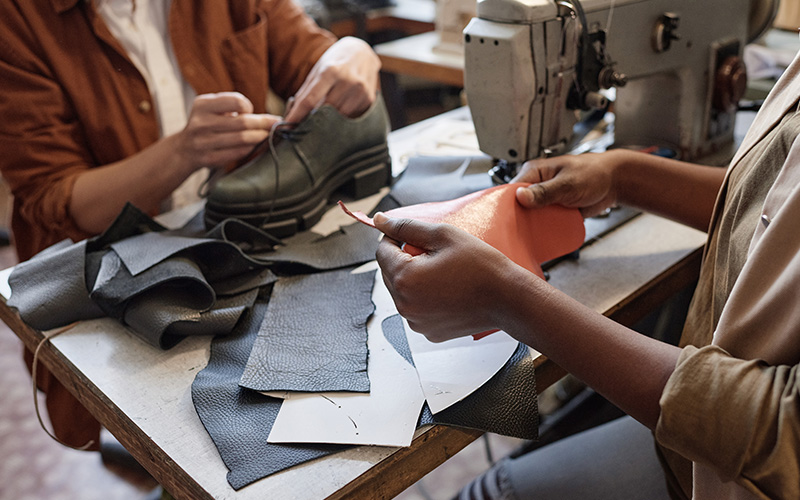
This section translates your brand vision into tangible product decisions: which shoe categories you will offer, how many styles you will launch with, what materials you will use, and how your products will be manufactured.
Collection Architecture — Categories, Style Count, and SKU Planning
A focused launch outperforms a scattered one. We consistently see that brands launching with 3–5 styles across 1–2 shoe categories perform better than those attempting to launch 10–15 styles across four or five categories. The smaller collection allows you to allocate more budget per style (better materials, more sample iterations, higher per-style order quantity), maintain tighter quality control, and build a clearer brand identity.
Your plan should specify the exact categories and styles you intend to launch. For example: “The launch collection will consist of 4 styles—2 ankle boots (one suede, one leather) and 2 loafers (one classic penny, one mule variant)—across 3 colorways each, producing 12 SKUs total.” This level of specificity demonstrates planning discipline.
When selecting categories, consider production complexity and cost implications. Simple shoe types like flat sandals and flats have lower manufacturing costs and simpler logistics. Complex categories like knee-high boots and sneakers cost more to produce and require more development time but often command higher retail prices and stronger brand perception.
Material and Quality Positioning
Your business plan should clearly state the materials you intend to use and why. Material selection is not just a design decision—it is a financial and brand-positioning decision. Italian full-grain leather communicates luxury and craftsmanship. Premium PU leather signals accessibility and vegan values. The choice cascades through your entire cost structure, from manufacturing costs to retail pricing to customer expectations.
For guidance on how different leathers affect product quality, cost, and brand perception, our complete guide to shoe leather types provides the technical and commercial context you need to make informed material decisions for your business plan.
Manufacturing Model — OEM, ODM, or a Hybrid Approach
Your plan should specify how your products will be manufactured. Will you design original shoes and have them produced to your specifications (OEM)? Will you select and customize designs from your manufacturer’s catalog (ODM)? Or will you use a combination of both? Each model has different cost, timeline, and IP implications that affect your financial projections.
If you are unsure which model is right for your brand, our OEM vs ODM guide breaks down the differences in terms of design ownership, cost structure, speed to market, and minimum order quantities—all factors that belong in your business plan.
Financial Projections — The Numbers That Determine Whether Your Brand Survives
The financial section is where most shoe brand business plans either build credibility or lose it. Investors and lenders will scrutinize this section more closely than any other. Your projections need to be grounded in real industry data, not wishful thinking.
Startup Cost Budget — What You Need Before Your First Sale
A realistic startup budget for a shoe brand launching with 3–4 styles at moderate volume includes several cost categories that new founders frequently overlook:
Product development costs include sampling ($1,000–$3,000 for 2–3 rounds across 3–4 styles), tooling for custom sole or heel molds ($1,000–$5,000 if applicable, eliminated if you use factory-stock molds), and tech pack or design fees ($500–$2,000 if working with a freelance designer). Production costs cover your first bulk order, typically $10,000–$25,000 for 300–500 pairs per style across 3–4 styles. Logistics costs include international freight, duties, and customs brokerage ($2,000–$5,000 for a first shipment). Brand and marketing costs cover e-commerce website development ($2,000–$8,000), product photography ($1,000–$3,000), initial digital marketing ($2,000–$5,000), and packaging design and production ($1,000–$3,000).
In total, a realistic minimum launch budget is $15,000–$40,000. Brands can launch at the lower end by using ODM designs (eliminating tooling and design costs), factory-stock lasts and molds, and simpler shoe categories.
Pricing and Margin Architecture
Your business plan must show a pricing structure that generates sufficient margin at every level of the distribution chain. The standard framework in footwear works as follows:
Start with your landed cost (FOB manufacturing cost + freight + duties + handling). Apply a markup to reach your wholesale price—the standard wholesale markup in footwear is 2.0x to 2.5x landed cost. Then apply the retail markup—retailers typically apply a 2.0x to 2.5x keystone markup from wholesale to retail. If you are selling DTC (direct-to-consumer), you capture the retail margin yourself, which improves profitability per pair but requires you to cover marketing and fulfillment costs.
Example: A shoe with a $30 landed cost, sold at wholesale for $65 (2.17x markup), retailing at $145 (2.23x retail markup). Your wholesale margin is $35 per pair. If sold DTC at $145, your margin is $115 per pair before marketing and fulfillment costs. The critical lesson: your manufacturing cost must be low enough to support this margin chain. If it is not, either your retail price will be uncompetitively high or your margins will be unsustainably thin.
Revenue Projections and Break-Even Analysis
Project your revenue for the first 12–24 months based on realistic sales volume assumptions. Avoid the common mistake of projecting hockey-stick growth from month one—most shoe brands ramp gradually as they build brand awareness, refine their marketing, and establish distribution relationships.
A conservative first-year projection for a DTC shoe startup might look like: Month 1–3 (launch phase): 50–100 pairs sold per month. Month 4–6: 100–200 pairs per month as marketing gains traction. Month 7–12: 200–400 pairs per month with repeat customers and expanded marketing. These numbers are illustrative—your actual projections should be calibrated to your marketing budget, channel strategy, and competitive landscape.
Your break-even analysis should show the month or quarter in which cumulative revenue exceeds cumulative costs (startup investment + ongoing operating costs + cost of goods sold). For most bootstrapped shoe brands, break-even occurs somewhere between month 8 and month 18, depending on the scale of the initial investment and the speed of revenue ramp.
Supply Chain and Manufacturing Plan — How Your Shoes Get Made and Delivered
This section demonstrates to readers of your plan—whether investors, partners, or yourself—that you have a concrete, actionable production strategy rather than a vague intention to “find a factory.”
Selecting and Vetting Your Manufacturing Partner
Your plan should identify where your shoes will be manufactured, ideally naming your manufacturing partner or shortlist. If you have already secured a factory relationship, describe their capabilities, experience, certifications, and the terms of your arrangement. If you are still evaluating options, outline your selection criteria and evaluation process.
Key factors to document include the factory’s specialization (do they produce the specific shoe categories you need?), quality certifications (LWG, GRS, ISO), minimum order quantities, lead times, and their experience with brands at your stage. Our guide on finding a reliable shoe manufacturer in China walks through the factory evaluation process in detail—useful background for writing this section of your plan.
Production Timeline and Seasonal Calendar
Footwear operates on seasonal cycles that dictate when you must place orders to have products ready for market. Your plan should include a production calendar showing key milestones: design finalization, sample approval, bulk order placement, production period, shipping and customs clearance, and warehouse receipt.
A typical timeline from order placement to warehouse delivery is 12–16 weeks for standard production, plus 8–12 weeks of development time before that. This means if you want autumn/winter products in your warehouse by August, you need to finalize designs by February and place production orders by April. Your business plan should demonstrate awareness of these timelines and show a realistic development calendar.
Inventory and Logistics Strategy
How will you store, manage, and ship your inventory? Your plan should address warehouse arrangements (self-managed, third-party logistics, or fulfillment center), inventory management systems, domestic shipping strategy, and return handling. For DTC brands, fulfillment cost per order is a significant line item—typically $3–$8 per order for pick, pack, and domestic shipping—that must be reflected in your financial projections.
Marketing and Sales Strategy — How Customers Will Discover and Buy Your Shoes
The best shoe in the world does not sell itself. Your marketing plan should outline specific, budgeted strategies for driving awareness, traffic, and conversion. Avoid generic aspirations (“we will use social media”) and instead specify concrete tactics, platforms, and budget allocations.
Distribution Channel Strategy
Will you sell DTC through your own e-commerce site, wholesale to retailers, or both? Each channel has different margin structures, capital requirements, and customer acquisition dynamics. DTC offers higher margins but requires you to fund customer acquisition through paid advertising, content marketing, and social media. Wholesale provides built-in distribution and customer traffic but requires you to sell at lower margins and often demands minimum inventory commitments.
Many new shoe brands start DTC to maximize margin and build direct customer relationships, then add selective wholesale partnerships as the brand gains recognition. Your plan should articulate this channel roadmap with projected revenue split by channel.
Digital Marketing and Customer Acquisition
For a DTC shoe brand, digital marketing is where most of your customer acquisition budget will go. Key channels to address in your plan include paid social advertising (Instagram, TikTok, Facebook—budget $2,000–$5,000/month at launch), influencer and creator partnerships (micro-influencers in fashion and lifestyle), search engine optimization (blog content targeting shoe-related queries—exactly what our blog content strategy at Joes Footwear demonstrates), email marketing (building and nurturing a subscriber list), and content marketing (editorial photography, styling guides, behind-the-scenes production content).
Specify your target customer acquisition cost (CAC) and the lifetime value (LTV) you expect from each customer. A healthy shoe brand typically targets an LTV:CAC ratio of at least 3:1—meaning each customer generates at least three times the cost of acquiring them.
Brand Story and Positioning
Every successful shoe brand has a story that resonates with its target audience. Your business plan should articulate your brand narrative concisely: Why does this brand exist? What does it stand for? How is it different from what already exists in the market? This story becomes the foundation for all your marketing communications, from website copy to social media content to wholesale pitch decks.
Milestones and Operational Roadmap — Your First 12 Months
Convert your plan into a concrete timeline of actions and milestones. This section shows that you have thought about execution sequence—not just strategy. A realistic first-year roadmap for a shoe brand might follow this progression:
Month 1–2: Finalize business plan and brand identity. Secure funding or allocate personal capital. Begin manufacturer evaluation and selection. If you are looking for a production partner, start the conversation with factories and request initial quotes.
Month 2–3: Confirm manufacturing partner. Submit design briefs or select ODM designs. Begin first sample development.
Month 3–5: Iterate through sample rounds (development sample, revision, confirmation sample). Simultaneously begin e-commerce development, brand photography planning, and pre-launch marketing.
Month 5–6: Approve final samples. Place bulk production order. Finalize e-commerce site. Begin pre-launch email list building and social media content.
Month 6–8: Production period. Prepare marketing assets, set up fulfillment logistics, and schedule product photography with finished production samples.
Month 8–9: Receive inventory. Final QC on delivered goods. Launch e-commerce site. Begin paid advertising.
Month 9–12: Active selling phase. Monitor sales data, customer feedback, and unit economics. Begin planning the second collection based on market response. Explore wholesale outreach if relevant.
This timeline assumes a single-season launch. Brands launching multiple categories or targeting wholesale from day one will need a longer runway. Discuss your specific timeline with your manufacturing partner early in the planning process to align your milestones with factory production schedules.
Common Mistakes in Shoe Brand Business Plans — And How to Avoid Them
Underestimating Total Startup Costs
Many plans budget for manufacturing but forget about tooling, sampling, freight, duties, photography, website development, and initial marketing. Use the cost framework in this guide and our manufacturing cost breakdown to ensure nothing is missing from your budget.
Setting Prices Based on Manufacturing Cost Alone
Your retail price must cover not just FOB manufacturing cost but also landed cost additions (freight, duty, insurance), fulfillment and shipping to customers, returns and exchanges (5–15% of orders for online shoe sales), marketing and customer acquisition, and operating overhead. Price based on your fully loaded cost, not just the factory invoice.
Launching with Too Many Styles
More styles means higher sampling costs, more tooling investment, lower per-style order quantities (which increases per-pair manufacturing cost), and greater inventory risk. Start focused. You can always expand in season two.
Ignoring the Seasonal Production Calendar
Factory lead times are real constraints. If your business plan shows a product launch in September but your development timeline does not begin until June, the math does not work. Map every milestone backward from your target launch date to confirm feasibility.
Neglecting Cash Flow Timing
Footwear has a long cash conversion cycle. You pay for materials and production months before you receive revenue from sales. Your plan must show a month-by-month cash flow projection that accounts for when money goes out (deposits, production payments, freight) and when it comes back in (product sales). Many otherwise viable shoe brands fail because they run out of cash between paying for production and generating enough sales revenue.

Ready to Move From Business Plan to Production?
A strong business plan is the bridge between your shoe brand idea and its physical reality. Once your plan is solid, the next step is engaging a manufacturing partner who can turn your product strategy into sample-ready shoes.
At Joes Footwear, we work with brands at every stage—from founders with nothing more than a business plan and a mood board to established labels placing their tenth production order. Our private label development team can review your collection plan, advise on manufacturing feasibility and cost optimization, and provide the production quotes your business plan needs to be credible.
Book a free discovery call with our team to discuss your project. Contact us here—we respond within one business day.
Frequently Asked Questions About Shoe Brand Business Plans
Do I need a business plan to start a small shoe brand?
Yes, even a lean business plan is essential. At minimum, you need a clear product strategy (which shoes, which materials, which manufacturer), a realistic cost analysis (startup budget, per-pair costs, landed costs), a pricing model that generates sustainable margins, and a basic marketing plan. You do not need a 50-page formal document—a focused 10–15 page plan covering these fundamentals is sufficient for most bootstrapped launches.
How much money do I need to start a shoe brand?
A realistic minimum budget for a first launch with 3–4 styles is $15,000–$40,000, covering product development, manufacturing, freight, and initial marketing. Brands can launch on the lower end by using ODM designs, factory-stock tooling, simpler shoe categories, and starting with DTC sales only. See our shoe manufacturing cost guide for a detailed cost breakdown by category.
What should I include in the financial section of my shoe brand business plan?
The financial section should include a detailed startup cost budget, a per-pair cost analysis (FOB + landed cost), a pricing and margin framework (wholesale and retail), monthly cash flow projections for at least 12 months, revenue projections based on realistic unit sales assumptions, and a break-even analysis showing when cumulative revenue exceeds cumulative investment.
Should I choose OEM or ODM manufacturing for my first launch?
This depends on whether design originality is core to your brand proposition. ODM is faster and cheaper for a first launch, making it ideal for testing the market. OEM is the right choice if your brand’s value proposition depends on unique, original designs. Many brands use a hybrid approach—OEM for 1–2 hero styles and ODM for complementary styles. For a full comparison, see our OEM vs ODM footwear guide.
How do I find a manufacturer for my shoe brand business plan?
Start by defining your product requirements (shoe categories, materials, volume, quality level) and then evaluate manufacturers based on their specialization, minimum order quantities, certifications, and experience with brands at your stage. We recommend requesting samples, checking references, and visiting the factory (or conducting a virtual tour) before committing. Our guide on finding a reliable shoe manufacturer in China provides a comprehensive factory evaluation framework.