
Leather is the single most important material decision you will make when developing a footwear collection. It affects how a shoe looks on the shelf, how it feels on the foot, how long it lasts through daily wear, and how much it costs to produce at scale. Yet most brand founders and emerging designers approach leather selection with only a vague understanding of the options available to them.
At Joes Footwear, we have spent over 17 years as a private label footwear manufacturer sourcing, testing, and producing with every leather type covered in this guide. We maintain direct partnerships with tanneries in Italy, Spain, Turkey, and across Asia—and we have seen firsthand how the right leather choice can elevate a product line, and how the wrong one can derail a launch.
This guide is written from a manufacturer’s perspective. It covers what each leather type actually is, how it performs in production, which shoe categories it suits best, and what you need to communicate to your factory when specifying materials. Whether you are developing your first shoe brand or refining an existing collection, this resource will sharpen your material vocabulary and help you make informed sourcing decisions.
What Makes Leather a Preferred Material for Footwear Manufacturing
Before examining individual leather types, it is worth understanding why leather dominates premium footwear in the first place. The answer lies in a combination of physical properties that no single synthetic material has fully replicated.
Leather breathes. Its fibrous structure allows moisture vapor to pass through the material, keeping the foot drier and more comfortable over extended wear periods. Leather molds. Over time, it conforms to the shape of the wearer’s foot, improving fit with each wear. Leather ages. Rather than degrading uniformly like most synthetics, quality leather develops a patina—a surface character that many consumers perceive as added value rather than deterioration.
From a manufacturing standpoint, leather is also remarkably workable. It can be cut with precision, stitched cleanly, folded over edges, heat-molded around a last, and bonded to soles with adhesive. These characteristics make it compatible with virtually every shoe construction method—from cemented assembly to Goodyear welt to Blake stitch—which is why it appears across every shoe category we produce, from high heels to boots to sneakers.
How Leather Is Made — From Raw Hide to Finished Shoe Material
Understanding the production process behind leather helps you evaluate quality claims, interpret spec sheets, and communicate effectively with your tannery or manufacturer. Every hide goes through three broad stages before it becomes the material you see on a swatch card: preparation, tanning, and finishing.
Tanning Methods and Their Impact on Shoe Leather Quality
Tanning is the chemical process that transforms raw animal hide into stable, usable leather. The two dominant methods are chrome tanning and vegetable tanning, and each produces fundamentally different material characteristics.
Chrome tanning uses chromium salts to stabilize the hide. It is the most common method globally, accounting for roughly 80–90% of all leather produced. Chrome-tanned leather is soft, pliable, and uniform in color. It takes dye well and is relatively resistant to water and heat. For footwear, chrome-tanned leather is ideal for shoes that need to be flexible and lightweight—pumps, sandals, sneakers, and soft-structured boots.
Vegetable tanning uses natural plant tannins—derived from oak bark, mimosa, chestnut, or quebracho—to cure the hide. The process is slower (weeks rather than days) and produces leather that is firmer, thicker, and less flexible initially. Veg-tanned leather is prized for products where structure and patina development are valued: belt leather, sole leather, saddle-stitched boots, and heritage-style shoes. It is also the preferred tanning method for brands with sustainability messaging, as the chemicals involved are biodegradable.
Combination tanning blends both methods to achieve a middle ground—the softness of chrome with some of the structural integrity and aging characteristics of vegetable tanning. This is increasingly popular in mid-to-high-end footwear production.
Finishing Techniques That Define Leather’s Surface Character
After tanning, leather undergoes finishing—the surface treatments that determine its final look, feel, and performance. Finishing is where a raw tanned hide becomes the specific material your customer touches in the store.
Aniline finishing applies transparent dyes that allow the natural grain pattern to show through. Aniline-finished leather looks the most natural and is reserved for the highest-quality hides because any surface imperfection remains visible. It is used in luxury loafers, premium dress shoes, and high-end boots.
Semi-aniline finishing adds a thin pigmented top coat over the aniline dye layer. This provides slightly more protection against staining and scuffing while still preserving much of the natural grain visibility. Semi-aniline is the most popular finish in the mid-to-premium footwear segment because it balances beauty with practicality.
Pigmented finishing applies an opaque coating that covers the surface entirely. This allows manufacturers to achieve perfectly uniform color and hide minor surface imperfections, but the leather loses some of its natural character. Pigmented finishes are common in volume production and corrected-grain applications.
Full-Grain Leather — The Gold Standard for Premium Footwear
Full-grain leather retains the outermost layer of the hide—the grain surface—completely intact. No sanding, buffing, or correction has been applied. This means the leather preserves its natural fiber structure, which gives it superior strength, breathability, and aging characteristics compared to any other leather grade.
Because the surface is unaltered, full-grain leather shows the natural markings of the animal’s life: growth lines, minor scars, pore patterns, and sometimes insect bites. In the luxury market, these characteristics are valued as proof of authenticity. In mass-market production, however, the natural variation can make color matching across a production run more challenging—a factor your manufacturer needs to account for during cutting and quality control.
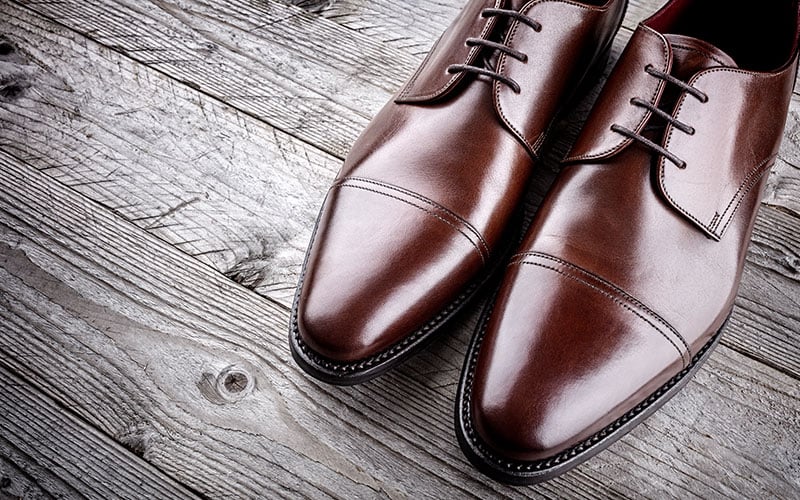
Full-grain leather is the premium choice for boots,ankle boots, structured pumps, and luxury loafers. It develops a rich patina over time, which means the shoes actually look better with age—a selling point for brands positioning themselves in the heritage or premium segment. When specifying full-grain leather in a private label order, always request a pre-production swatch to verify grain consistency, thickness, and hand feel before approving production.
Top-Grain Leather — Refined Surfaces for Consistent Production
Top-grain leather starts with the same hide as full-grain, but the outermost surface is lightly sanded or buffed to remove imperfections. A pigmented or semi-aniline finish is then applied to create a more uniform appearance. The result is leather that is slightly thinner and more pliable than full-grain, with a cleaner, more consistent surface.
For footwear brands producing at volume, top-grain leather offers an excellent balance between quality and producibility. The sanding process improves yield by making a larger percentage of each hide usable—imperfections that would disqualify a section of full-grain leather can be corrected through the buffing and finishing process. This translates to lower material waste and more predictable per-pair costs.
Top-grain leather is widely used across mid-range pumps, professional flats, and everyday loafers. It accepts color well and can be finished to achieve almost any surface effect—matte, semi-gloss, or high-shine. If your brand prioritizes color consistency across a collection of 10 or more styles, top-grain is often the most practical choice.
Corrected-Grain and Split Leather — Cost-Effective Alternatives for Volume Brands
Corrected-grain leather is a sub-category of top-grain where the surface has been heavily sanded and then stamped with an artificial grain pattern. This process eliminates virtually all natural surface variation, producing a leather that looks uniform and “perfect” to the casual eye. It is significantly less expensive than full-grain or lightly corrected top-grain and is commonly used in entry-level branded footwear and high-volume retail shoes.
The trade-off is reduced breathability and a less natural feel. Because the natural pore structure has been sanded away and replaced with a coating, corrected-grain leather does not breathe or mold to the foot the way full-grain or top-grain does. For shoes worn only occasionally—such as occasion heels or seasonal sandals—this is rarely a problem. For everyday shoes, it can affect long-term comfort.
Split leather comes from the lower layers of the hide after the top grain has been separated. It is weaker and less durable than grain leather and is typically coated with polyurethane to create a leather-like surface (sometimes called “bi-cast leather” or “coated split”). Split leather is the most affordable real leather option, but it wears and ages less gracefully than higher grades. When working with a shoe manufacturer in China, clarifying whether you are specifying top-grain or coated split is critical—the visual difference at the swatch stage can be subtle, but the performance difference over the shoe’s lifespan is dramatic.
Nappa Leather — Softness and Luxury in Every Pair
Nappa leather (sometimes spelled “napa”) is a full-grain or top-grain leather that has been tanned and finished to be exceptionally soft and supple. The term “nappa” does not refer to a separate animal source—it describes a finishing result. Nappa leather can come from lamb, goat, cow, or calf hides, though lamb and goat nappa are the softest.
The softness comes from a combination of factors: selecting thinner, finer-grained hides, using chrome tanning with specific fatliquoring agents that lubricate the fiber structure, and applying minimal surface coating so the leather retains maximum flexibility. The result is a material that drapes, stretches, and wraps around forms beautifully.
In footwear, nappa leather is the go-to choice for luxury pumps, elegant slingbacks, high-end sandals, and any shoe where a buttery hand feel is a core brand promise. It is also widely used for glove-soft boot linings and padded insoles. However, nappa’s softness comes with a durability trade-off: it scratches and scuffs more easily than firmer leathers, and it offers less structural support. This is why nappa works best in shoe styles that have internal reinforcement or where the softness itself is the design feature.
Suede and Nubuck — Textured Finishes for Distinctive Shoe Design
Suede and nubuck are both leather types characterized by a soft, napped surface—a velvety texture created by abrading the leather’s fiber structure. Despite looking similar at first glance, they come from different parts of the hide and perform differently in footwear applications.
Suede — The Inner Surface, Elevated
Suede is made from the inner (flesh) side of a split hide. The fibers on this surface are naturally loose and can be buffed to create the characteristic soft nap. Because suede comes from the weaker split layer, it is less durable and more susceptible to staining and moisture damage than grain-side leathers.
Despite these limitations, suede remains immensely popular in footwear because of its distinctive visual and tactile appeal. It adds depth and texture to any design, absorbs color richly, and creates a premium feel. Suede is widely used in women’s ankle boots, casual loafers,mules, and autumn/winter pump collections. When ordering suede shoes for production, always specify whether a water-repellent treatment should be applied during finishing—this adds minimal cost but significantly improves the shoe’s resistance to rain and spills.
Nubuck — The Grain Surface, Softened
Nubuck is created by lightly sanding the outer (grain) side of a full-grain hide. This produces a napped surface similar to suede but with the structural integrity of grain leather underneath. Nubuck is thicker, more durable, and more resistant to wear than suede, while offering a similarly soft, matte texture.
Nubuck is the preferred choice for footwear that needs to combine the suede look with greater longevity: hiking-inspired boots, premium casual shoes, and high-end sneakers. It costs more than suede because it uses the higher-quality grain portion of the hide. For brands targeting the outdoor-luxury or elevated-casual market, nubuck delivers a tactile premium that photographs well and holds up to real-world wear.
Patent Leather — High-Gloss Finishes for Formal and Evening Shoes
Patent leather is defined by its mirror-like, high-gloss surface. The effect is achieved by applying multiple layers of lacquer or polyurethane coating to the grain surface, then polishing to a reflective shine. Modern patent leather is almost exclusively produced using synthetic coatings (historically, linseed oil or linseed-based lacquers were used).
The glossy surface is inherently eye-catching, which makes patent leather a natural fit for statement shoes: evening pumps, formal heels,wedding shoes, and designer accessories. Patent leather also photographs exceptionally well, which is an underrated advantage for brands selling primarily through e-commerce.
From a production perspective, patent leather requires careful handling during cutting and stitching because the coating can crack or wrinkle if the material is bent too sharply. Temperature control during lasting is also important—the coating can soften under heat and lose its finish. These are the kinds of manufacturing details that an experienced footwearproduction partner manages automatically, but newer factories may struggle with.
Exotic and Specialty Leathers — Embossed, Metallic, and Textured Options
Beyond the standard grain types, the footwear industry uses a wide range of specialty leather finishes that create distinctive visual effects without necessarily changing the base leather grade.
Embossed leather has a pattern pressed into the grain surface using heat and high-pressure plates. The most common embossing patterns mimic exotic skins—crocodile, snake, ostrich, and lizard—at a fraction of the cost of genuine exotic hides. Embossed leather is popular in accessories and women’s shoes where a textured surface adds visual interest. We use embossed leathers extensively in our private label bag program and in accent panels on heels and boots.
Metallic leather is produced by applying a thin metallic foil or metallic finish to the surface of chrome-tanned leather. Gold, silver, rose gold, and copper are the most requested metallic tones. Metallic leather is a staple in evening footwear, wedding collections, and seasonal statement pieces.
Printed leather involves digitally or screen-printing patterns, artwork, or custom designs directly onto the leather surface. This technique has become more accessible and cost-effective in recent years, allowing brands to create truly unique, limited-edition designs without the expense of custom tanning.
Genuine exotic leathers—from animals like crocodile, alligator, ostrich, or python—are still used in ultra-luxury footwear. However, they carry significantly higher costs, complex import regulations (CITES permits are required for many species), and ethical scrutiny. Most brands today achieve the exotic look through embossing rather than genuine exotic sourcing.
Synthetic and Vegan Leather Alternatives — PU, Microfiber, and Plant-Based Materials
The synthetic leather market has evolved dramatically in the past decade. What was once a clearly inferior substitute is now, in some applications, a legitimate alternative to animal-derived leather—particularly for brands building on vegan, sustainable, or price-conscious positioning.
PU (polyurethane) leather is the most common synthetic used in footwear. It consists of a fabric backing coated with a polyurethane layer that simulates the look and feel of leather. Quality varies enormously: low-end PU feels plasticky and cracks within months, while high-end PU (sometimes called “eco-leather” in Italy) can closely mimic the hand feel of real leather and last for years. For brands entering the market at an accessible price point, high-quality PU is a viable option—but the quality must be specified clearly when placing a private label order.
Microfiber leather is a more advanced synthetic composed of ultra-fine polyester or nylon fibers bound with PU resin. The result is a material that is lighter, more breathable, and more durable than standard PU leather. Microfiber is widely used in athletic and performance footwear, and it is gaining traction in fashion footwear as a premium vegan option.
Plant-based leathers represent the newest category. Materials derived from cactus (Desserto®), pineapple leaf fiber (Pinatex®), mushroom mycelium (Mylo™), apple waste, and grape skins are all now available at commercial scale. These materials vary significantly in their readiness for footwear—some work well for uppers but not for high-stress areas like heel wraps or toe caps. Our team has sourced and tested many of these materials and can advise on their suitability for specific shoe types. For a deeper exploration, our upcoming guide on sustainable and vegan shoe materials will cover the certifications, performance data, and supply chain logistics involved.
How to Choose the Right Leather for Your Shoe Category
Selecting leather is not a one-size-fits-all decision. The best leather for a structured ankle boot is not the best leather for a delicate evening sandal. Here is a practical framework organized by shoe category, based on what we see working consistently across our production lines.
Pumps and heels: Nappa leather, semi-aniline finished top-grain, or patent leather. Softness and clean finishing matter most because the shoe’s surface is prominently visible and the fit must be precise. Our pump collection demonstrates the range of leather finishes possible within this single category.
Boots: Full-grain leather for premium positioning, top-grain for volume production, or suede/nubuck for seasonal texture. Boots demand durability because they encounter more physical stress—walking, bending, weather exposure. See our knee-high boots and ankle boots for examples.
Sandals: Nappa or soft top-grain for straps, full-grain or veg-tanned leather for footbeds. Since sandal straps sit directly against skin, softness and edge finishing are critical. Stiff or poorly finished leather will cause blistering.
Sneakers: Smooth full-grain, tumbled top-grain, or premium PU/microfiber. Sneaker construction involves heat-forming and adhesive bonding that not all leathers tolerate equally. Consult with your factory’s material team before finalizing a sneaker leather. Our sneaker production program covers material compatibility in the development process.
Loafers and flats: Nappa for luxury, suede for casual, corrected-grain for volume. These are shoes that undergo significant flex cycling at the forefoot, so the leather must resist cracking under repeated bending. Leather thickness in the range of 0.7–1.0 mm is typical for this category.
For an overview of how different shoe types are constructed—and how leather choice intersects with construction method—see our complete guide to types of women’s shoes.
Leather Certifications and Responsible Sourcing — LWG, GRS, and OEKO-TEX
Sustainability and traceability are no longer optional for brands selling into Western retail markets. Major department stores, online platforms, and wholesale buyers increasingly require documentation that the leather in your shoes comes from responsible sources. Understanding the key certifications will help you communicate with both your tannery and your end buyers.
LWG (Leather Working Group) is the most widely recognized environmental certification for tanneries. LWG audits evaluate a tannery’s water usage, chemical management, energy consumption, and waste treatment. Tanneries are rated Gold, Silver, or Bronze. Specifying LWG-certified leather signals to retail buyers that your supply chain meets international environmental standards. At Joes Footwear, we source from LWG-certified tanneries as standard practice.
GRS (Global Recycled Standard) certifies that a material contains recycled content and has been produced with social and environmental responsibility throughout the supply chain. In footwear, GRS certification applies primarily to recycled polyester linings, recycled rubber soles, and recycled PU materials. It complements LWG by covering the non-leather components of your shoe.
OEKO-TEX Standard 100 tests finished materials for harmful substances. A shoe material with OEKO-TEX certification has been verified to be free from chemicals that could pose health risks through skin contact. This certification is particularly relevant for footwear linings and insoles—the components in direct, prolonged contact with the foot.
If sustainability is a pillar of your brand story, our about page details our environmental commitments, and we can guide you through the certification landscape as part of your development process.
Ready to Select the Right Leather for Your Collection?
Choosing leather is one of the most consequential decisions in footwear development. The right material elevates your design, satisfies your customer, and supports your brand story. The wrong one undermines all three.
At Joes Footwear, we don’t just manufacture shoes—we consult on materials. Our team can send you curated swatch sets matched to your shoe category, price positioning, and target market. We’ll walk you through tannery options, discuss MOQ implications, and help you make a leather decision that serves both your design vision and your production budget.
Request material swatches or start a conversation about your next collection by contacting our development team. We respond within one business day.
Frequently Asked Questions About Shoe Leather Types
What is the difference between full-grain and top-grain leather in shoes?
Full-grain leather retains the original hide surface with no sanding or buffing, preserving the natural grain pattern and maximum durability. Top-grain leather has been lightly sanded to remove surface imperfections and then finished for a more uniform appearance. Full-grain develops a richer patina over time and is considered the higher-quality option, while top-grain offers better consistency for volume production.
Is genuine leather the same as real leather?
The term “genuine leather” is often misunderstood. While it does mean the material is real animal leather, “genuine leather” as a grade designation typically refers to one of the lower quality tiers—often corrected-grain or coated split leather. When sourcing, always specify the exact leather type (full-grain, top-grain, nappa, suede, etc.) rather than relying on the generic term “genuine leather.”
Which leather type is best for vegan-friendly shoe brands?
For brands seeking a vegan alternative with a premium feel, high-quality microfiber leather and plant-based options like cactus leather offer the closest experience to animal leather. PU leather is the most affordable vegan option and works well for fashion-forward seasonal styles. The best choice depends on your price point, target market, and the specific shoe categories in your collection.
How do I specify leather quality when placing a private label footwear order?
Always specify the leather type (full-grain, top-grain, nappa, suede, etc.), the animal source (cow, calf, lamb, goat), the thickness range (in millimeters), the finishing type (aniline, semi-aniline, pigmented), and any certification requirements (LWG, OEKO-TEX). Requesting physical swatch samples before approving production is essential—photographs do not accurately convey hand feel, flexibility, or true color. Contact our team to request a consultation and swatch set tailored to your project.
Does leather choice affect shoe manufacturing cost?
Significantly. Full-grain and nappa leathers from Italian or European tanneries can cost 3–5 times more per square foot than corrected-grain or PU alternatives from Asian sources. Exotic leathers and plant-based innovations carry their own premium pricing. Beyond raw material cost, different leathers also affect manufacturing efficiency—softer leathers are harder to cut and last precisely, which can increase labor costs per pair. Understanding these dynamics is essential when planning your footwear production budget.