
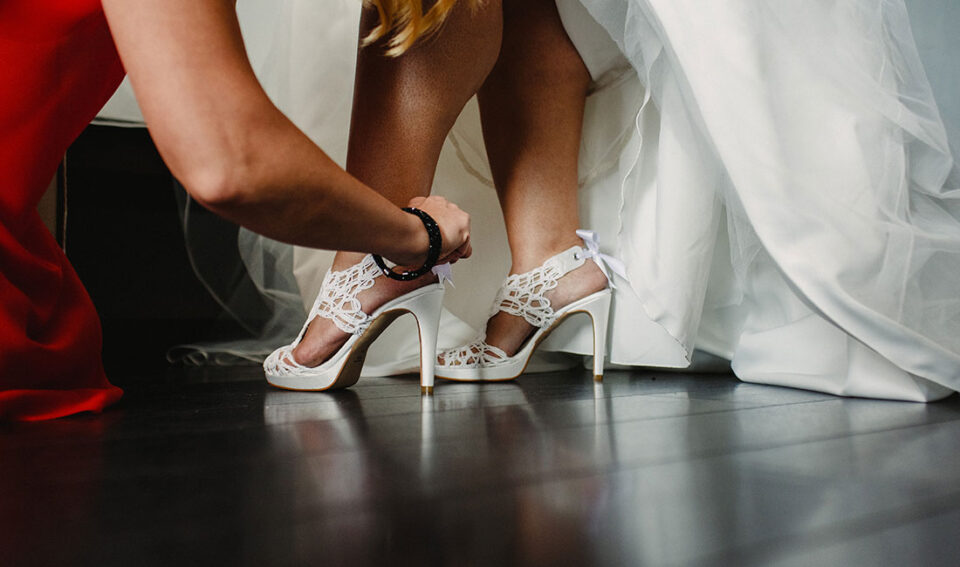
Pairing wedding shoes with a lace dress depends on lace type, dress shape, shoe color, material, heel height, and venue. The safest choice is usually a smooth shoe that matches the dress undertone, not the exact shade. This matters because lace can look different in daylight, indoor lighting, and photos.
Smooth satin, kid leather, nappa leather, and fine mesh can help reduce snagging at the hem. Based on bridal fit and footwear design principles, this guide explains how brides can choose shoes for Chantilly, Alençon, Guipure, Venice, beaded, and 3D lace dresses. It also covers flats, sandals, pumps, block heels, boots, accessories, and common mistakes to avoid before fittings.
What are the Core Rules for Pairing Wedding Shoes with a Lace Dress?
Six rules govern the pairing. Brides should match undertones instead of exact shades. The shoe material should be smoother than the lace. Embellishment should be limited to one focal point. The hem length dictates shoe visibility. Heel height must be finalized before alterations. A second shoe for the reception should be planned early.
These six points are numbered below for reference during fittings:
- Match undertones, not exact shades. Lace dyes vary by mill and batch, so exact matches often read as mismatches under warm reception lighting. Aligning warm to warm and cool to cool produces a cleaner photograph.
- Keep the shoe smoother than the lace. A rougher shoe upper abrades threads as the hem swings during walking. Smooth uppers slide against the hem without catching.
- Limit embellishment to one focal point. A beaded dress pairs with a plain shoe, and a plain dress supports a decorated shoe.
- Respect the hem length. Floor-length hems hide the shoe. Tea-length and mini hems show the full shoe in every photograph.
- Finalize heel height before alterations. Seamstresses set the hem based on the chosen shoe, and switching heel height afterward leaves the dress too long or too short.
- Plan a second shoe for the reception. Ceremony heels rarely suit several hours of dancing, so most brides change into flats or block heels.
How does lace type affect shoe choice?
Bridal lace falls into three categories:
- Delicate lace such as Chantilly and Alençon pairs with minimal shoes
- Structured lace such as Guipure, Venice, and Battenburg supports bolder silhouettes
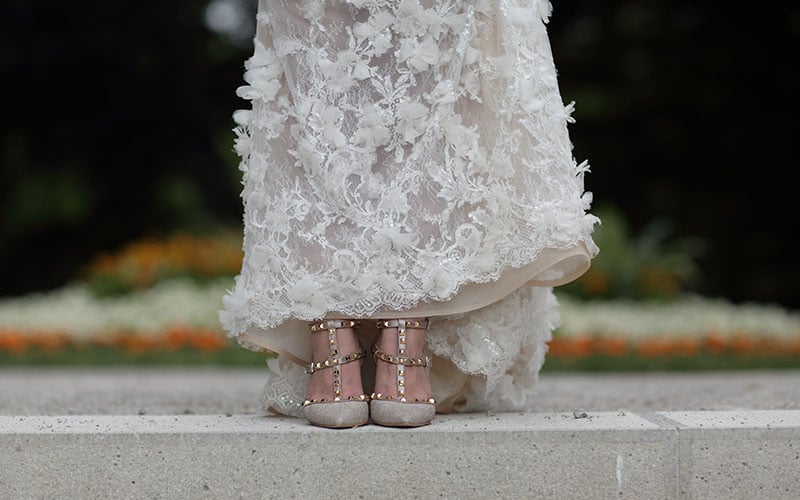
- Beaded or 3D floral lace requires quiet, unembellished shoes so the dress embellishment stays the focal point.
Which Shoes Work with Chantilly and Alençon lace?
Chantilly and Alençon are lightweight laces with fine thread counts and a transparent ground. They call for smooth, low-profile shoes that do not compete with the pattern. Plain satin pumps, kid leather sandals, and wedding flats work here. Pointed-toe silhouettes read cleaner than rounded ones.
Which Shoes Work with Guipure and Venice lace?
Guipure and Venice laces have heavier motifs and no mesh ground. They tolerate stronger shoe shapes without visual conflict. Block-heel wedding pumps, slingbacks, and structured sandals all suit this lace weight. Shoes with moderate metallic sheen also work.
Which Shoes Work with Beaded or 3D Floral Lace?
Beaded and 3D floral lace already carries significant visual weight, so the shoe should recede. Plain kid leather, duchess satin, and matte mesh in a single tone match best. Crystal-covered or sequined shoes create visual clutter with this lace type.
How Does the Dress Silhouette Affect Shoe Choice?
Silhouette determines how visible the shoe is. A-line and ballgown hems hide the shoe entirely. Mermaid and sheath silhouettes reveal the shoe with every step. Tea-length and mini dresses make the shoe a visible element in every photograph.
What Shoes Work with A-line and Ballgown Lace Dresses?
A-line and ballgown hems cover the shoe except during stairs or lifted skirts. Comfort takes priority over visibility in these silhouettes. Platform sandals, block heels, and wedding sneakers all work, as long as heel height matches the hem.
What Shoes Work with Mermaid and Sheath Lace Dresses?
Mermaid and sheath silhouettes narrow at the ankle and reveal the shoe. The silhouette of the shoe matters more than the color here. Pointed-toe pumps, stiletto wedding heels, and ankle-strap sandals align with the dress’s vertical line.
What Shoes Work with Tea-length and Mini Lace Dresses?
Tea-length and mini dresses expose the full shoe, so the shoe becomes an accessory rather than a hidden base. Decorative pumps, Mary Janes, and metallic sandals suit this length. Vintage T-strap shoes work with 1950s-style tea-length gowns.
What Color Shoes Work Best with a Lace Wedding Dress?
Three colors cover most brides: ivory, champagne, and nude. Ivory matches most lace gowns. Champagne works across skin tones and venue lighting. Nude lengthens the leg in photographs. Metallic and statement colors work for modern or civil ceremonies.
The following table summarizes how each color performs under common wedding conditions:
| Shoe Color | Best Dress Match | Lighting Behavior | Leg-Line Effect |
| Ivory | Ivory and diamond white lace | Holds warmth under tungsten | Neutral |
| Champagne | Ivory, champagne, blush lace | Consistent across daylight and flash | Slightly lengthening |
| Nude | Lace close to wearer’s skin tone | Best in full daylight | Most lengthening |
| Metallic (silver, gold) | Modern or civil ceremony dresses | Reflects ambient color | Variable |
| Statement (red, blue) | Short or tea-length lace dresses | Draws the camera to the shoe | Variable |
Which Shoe Materials Pair Safely with Lace?
Smooth materials protect lace from snagging. Satin, kid leather, nappa, fine mesh, and duchess satin slide against the hem without catching threads. Coarse woven uppers with exposed fibers, unfinished suede edges, and studded trims tear lace and should be avoided. Finished raffia with bound edges is safe; unfinished raffia is not..
Material selection has two effects on the pairing. First, smoother uppers reduce friction between the hem and the shoe, which prevents snagged threads during the ceremony. Second, matte materials avoid a reflective clash with lace’s textured surface under flash photography.
The following list separates safe materials from materials that damage lace:
- Safe: duchess satin, kid leather, nappa leather, fine mesh, silk crepe, smooth polyester satin
- Acceptable: patent leather (with modern lace), matte metallic foils, fine glitter under a clear topcoat
- Avoid: unfinished raffia edges, rope espadrille with exposed jute, unfinished suede edges, rhinestones with exposed prongs, cork with rough fibers, untrimmed feathers
Which Shoe Styles and Heel Heights Work with a Lace Dress?
A 2–3 inch heel suits most brides and venues, matching the most-selected bridal heel range in The Knot 2024 Real Weddings Study. Block heels handle grass and cobblestone. Flats and sandals fit beach and boho weddings. Ankle boots suit rustic and winter ceremonies.
What Heel Height Works Best for a Lace Wedding Dress?
A 2–3 inch heel works for most brides. This range balances posture, foot fatigue, and alteration length across a full wedding day. Brides over 5’8″ often drop to 1–2 inches to match the groom’s height. Petite brides may choose 3–3.5 inches.
When Should Brides Choose Flats or Sandals?
Flats and sandals suit outdoor, beach, garden, and boho weddings. Grass, sand, and uneven stone catch stiletto heels and pull threads from the hem. Flat sandals and block-heel sandals resist these surfaces and protect the lace.
When Do Block Heels, Boots, or Sneakers Work with Laces?
Block heels, ankle boots, and sneakers work with casual, rustic, or modern lace dresses. Block heels distribute weight across a wider base on grass and cobblestone. Ankle boots suit winter and barn weddings. White leather sneakers suit tea-length lace at the reception.
How Should Wedding Shoes Coordinate with the Veil, Clutch, and Jewelry?
Coordination runs by metal tone and material, not by matching the dress twice. Jewelry metal should align with shoe hardware. Clutch fabric should echo shoe finish. Veil lace pattern should echo shoe embellishment scale. Bridesmaid shoes follow the bride’s color family.
The coordination rules group into four pairings:
- Jewelry and shoe hardware: gold jewelry pairs with gold buckles, silver jewelry pairs with silver or platinum hardware.
- Clutch and shoe finish: a satin clutch pairs with satin shoes, while a beaded evening bag pairs with a plain leather shoe.
- Veil and shoe pattern scale: fine lace veil edging pairs with small-scale shoe embellishment, and large veil appliqués suit plain shoes.
- Bridesmaid shoes: bridesmaid shoes should align with the bride’s shoe color family without matching exactly.
What Mistakes Should Brides Avoid When Pairing Shoes with a Lace Dress?
Six common mistakes appear across bridal forums and salon fittings. Brides should watch for each one during shoe selection.
- Mixing two different lace patterns on the dress and the shoe.
- Using rough materials such as raffia or exposed rhinestone prongs that catch the hem.
- Wearing true white shoes with an ivory dress, which creates a visible undertone mismatch.
- Choosing stilettos for grass, sand, or cobblestone venues.
- Skipping the two-week break-in period before the wedding day.
- Buying lace shoes that exactly match the dress lace instead of a complementary scale.
FAQs
Do wedding shoes need to match the exact shade of the lace?
No. Matching undertones is more important than matching exact shade. Dye lots vary between the dress lace and the shoe materials. Pairing warm undertones together (ivory with champagne) or cool undertones together (diamond white with silver) photographs better than chasing an exact shade match.
Can you wear flats with a lace wedding dress?
Yes. Flats work with A-line, ballgown, tea-length, and beach lace dresses. Floor-length dresses need a hem alteration based on the flat shoe height. Pointed-toe flats lengthen the leg line in photographs. Ballet flats and slip-on leather flats suit casual ceremonies. Open weaves need bound edges to protect them.
What shoes work for a petite bride in a lace mermaid dress?
Pointed-toe pumps in the 3–3.5 inch range work best for petite brides. Pointed toes extend the visual leg line. Nude shoes close to the bride’s skin tone add perceived height. Ankle straps should sit high to avoid cutting the leg line. Block heels under 3 inches provide stability.
How do you make lace wedding shoes look modern instead of dated?
Modern lace shoes use flat appliqué rather than thick raised appliqué. They pair with plain dresses and avoid pearl or heavy crystal finishes. Pointed-toe silhouettes, low-vamp designs, and matte leather ankle straps update the style. Block heels and square toes read more contemporary than rounded stilettos.
Can you dye wedding shoes to match a lace dress?
Yes, but only for certain materials. Satin and silk shoes dye predictably. Leather and synthetic materials absorb dye unevenly. Professional bridal dye services typically fall in the 40–40–40–75 range per pair at US bridal retailers. Brides should bring a lace fabric sample rather than a photograph.
Can you wear ankle boots with a lace wedding dress?
Yes. Ankle boots suit rustic, barn, winter, and boho lace dresses. White or nude leather boots work under tea-length and midi lace gowns. Full-length lace dresses hide most of the boot, which preserves the formal silhouette. Low-heel Western-style boots suit ranch and outdoor ceremonies.