
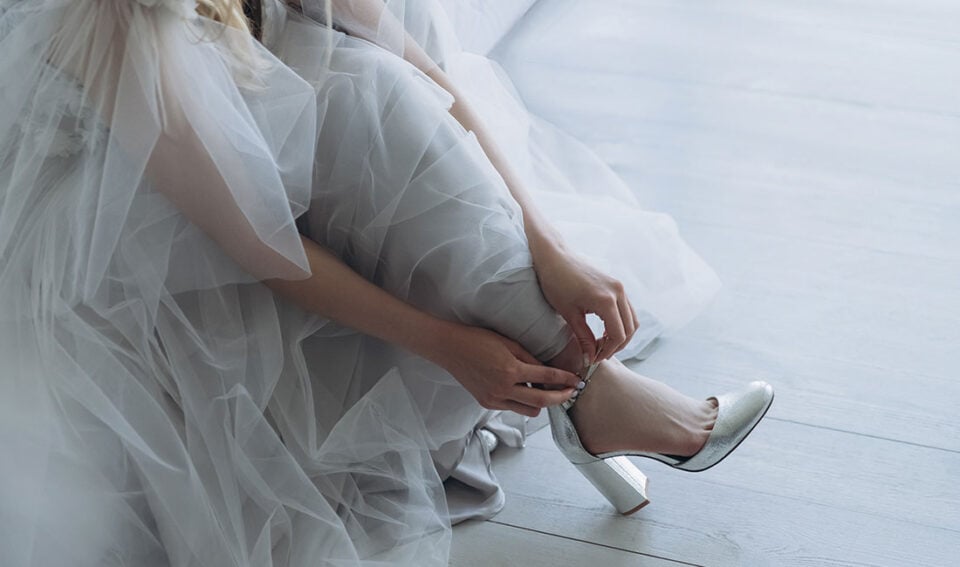
In 2026, a growing number of brides are choosing their shoes first — then building the gown, accessories, and overall aesthetic around that single statement piece. The shoe is no longer an afterthought tucked beneath a floor-length hem. It is the anchor of the entire bridal outfit.
For brides, this article provides a complete guide to the ten shoe trends shaping 2026 weddings. For footwear brands and buyers, it maps the product opportunities behind each trend — and how an OEM/ODM manufacturing partner like Joes Footwear can bring them to market.
What Are the Biggest Wedding Shoe Trends for 2026?
The biggest wedding shoe trends for 2026 include vintage-inspired ballet flats and Mary Janes, slingback heels, sculptural block heels, bridal mules, sheer mesh textures, statement embellishments like pearls and feathers, non-white colorways, bridal boots, and sustainable materials.
Why Are Brides Moving Away From Traditional White Stilettos?
The shift is driven by wedding format diversity. Outdoor ceremonies on grass, destination weddings on sand, and casual post-elopement dinners all require footwear that prioritizes stability and versatility over tradition. A growing number of brides now select their shoes before the gown, building the entire look around a statement footwear piece.
Trend #1 — Vintage Revival: Ballet Flats & Mary Janes Are Back on the Aisle
Ballet flats and Mary Janes have re-entered the bridal conversation with force. These vintage-inspired silhouettes are no longer seen as too casual for a wedding — not when they arrive in pearl-embellished mesh, hand-applied lace overlays, and elastic bow straps that blend 1960s charm with modern craftsmanship.
The appeal is both aesthetic and practical. Brides planning civil ceremonies, garden parties, or all-day celebrations benefit from a shoe that delivers elegance without the fatigue of a high heel. Mary Janes, with their secure T-strap structure, offer particular stability for brides who want a retro look with confident footing.
The following brides are especially drawn to this trend:
- Comfort-first brides who plan to be on their feet for 8+ hours
- Vintage theme weddings channeling Old Hollywood or 1960s mod aesthetics
- Civil ceremony brides seeking polished but understated footwear
For brands looking to develop vintage-inspired bridal flats with custom embellishment options,Joes Footwear’s product development capabilities support small-batch, multi-style development across silhouettes including flats.
Trend #2 — The Slingback Moment: Elegance That Lasts Beyond the Wedding Day
The slingback heel has emerged as one of 2026’s most versatile bridal silhouettes. Its open-back design reduces pressure on the heel, prevents snagging on delicate gown fabrics, and transitions effortlessly from ceremony to reception to post-wedding life.
Re-wearability is the core selling point. White satin slingbacks can be professionally dyed after the wedding, while champagne or metallic versions require no modification at all — they simply become part of the bride’s everyday wardrobe. This “buy once, wear forever” mentality resonates strongly with modern consumers who resist single-use purchases.
Brands can explore slingback development across satin, leather, and mesh through Joes Footwear’s high-heel manufacturing services, which support multi-material variation on classic silhouettes.
Trend #3 — Mules Take the Aisle: From Casual Slip-On to Bridal Sculpture
The mule — once considered strictly casual — has been elevated to bridal status through luxurious detailing. In 2026, bridal mules feature lace overlays, marabou feather trim, and oversized grosgrain bows that transform a simple slip-on shape into a wearable work of art.
The table below outlines the three dominant decoration directions defining bridal mules this year:
| Decoration Style | Aesthetic | Ideal Wedding Setting |
| Lace overlay | Romantic, vintage | Spring garden ceremonies |
| Marabou feather trim | Dramatic, luxe | Winter or evening weddings |
| Oversized grosgrain bow | Architectural, modern | Minimalist contemporary venues |
Mules are particularly well-suited for destination weddings and summer celebrations, where their easy on-off design offers practical convenience alongside visual impact.
Brands interested in mule development with diverse embellishment techniques can explore Joes Footwear’s sandal manufacturing options, including mule styles.
Trend #4 — Sculptural & Block Heels: Where Comfort Meets Wearable Art
The architectural block heel is replacing the traditional stiletto as the default bridal heel shape. In 2026, many bridal footwear experts recommend heel heights between 7 and 9 cm as the optimal balance — a range that provides a flattering leg line while distributing weight evenly enough for all-day wear across varied surfaces.
What distinguishes this trend from the standard block heel is the level of design ambition. Sculptural heels now take the form of mirror-finished geometric shapes, pearl-shell compositions, and abstract cutout structures. These are heels that function as design statements in their own right.
This level of sculptural complexity demands precision manufacturing — specifically, advanced mold development and fitting engineering expertise. Joes Footwear’s technical and fitting engineering services support brands in developing complex heel molds while ensuring ergonomic comfort and consistent sizing.
Trend #5 — Beyond White: Pastels, Metallics & Unexpected Hues Transform Bridal Shoes
White and ivory are no longer the only options. The 2026 bridal shoe color palette has expanded dramatically, with the following shades leading the shift:
- Sage green & dusty eucalyptus — Natural, romantic, ideal for outdoor ceremonies
- Dusty pink & blush — Warm and complementary to white gowns rather than competing with them
- Champagne gold & soft silver — Metallic finishes that reflect ambient lighting at evening weddings
Metallic tones are particularly effective under warm candlelight or string-light setups, where they catch and reflect light in ways that white satin simply cannot. Meanwhile, soft pastels in silk satin, velvet, or suede photograph beautifully in natural daylight, harmonizing with greenery-filled décor and floral installations.
For brands seeking multi-color small-batch production with diverse fabric sourcing, Joes Footwear’s product development team manages the full material selection process.
Trend #6 — Sheer & Transparent Textures Add a New Dimension to Bridal Footwear
Transparent and semi-sheer materials have become one of 2026’s most visually distinctive bridal shoe trends. Fine tulle, breathable mesh, and sleek vinyl panels add lightness and depth, creating an almost “glass slipper” effect that visually elongates the foot and pairs seamlessly with flowing bridal gowns.
Each material serves a different aesthetic purpose:
- Tulle — Soft and romantic, ideal for vintage-inspired designs
- Mesh — Structured and breathable, excellent as a base for pearl or crystal embellishments
- Vinyl/PVC — Modern and editorial, delivering maximum transparency for a bold statement
These textures are especially popular for spring and summer weddings, where their airy quality complements the season. Brands can access these specialty fabrics through Joes Footwear’s material sourcing services.
Trend #7 — Statement Embellishments: Pearls, Feathers & 3D Florals Command Attention
Embellishment is the battlefield where two competing bridal aesthetics meet. On one side, “quiet luxury” brides favor subtle pearl accents and delicate crystal scattering. On the other, maximalist brides embrace oversized 3D organza flowers, cascading feather trim, and dense jewel clusters that turn the shoe into a centerpiece.
Feathers are a notably new addition in 2026. Marabou trim at the toe, ostrich plumes along the heel, and feather pom-poms at the ankle all add movement and tactile richness — particularly striking at winter ceremonies against heavier fabrics. Meanwhile, jewelled shoes are gaining momentum among brides wearing shorter hemlines, where intricate crystal work becomes the visual focal point of the outfit.
Brands requiring rapid prototyping for embellished bridal styles can leverage Joes Footwear’s design CAD and sampling capabilities to move from concept to sample efficiently.
Trend #8 — Bridal Boots: The Fashion-Forward Choice Redefining Wedding Footwear
Bridal boots are no longer unconventional — they are one of 2026’s most talked-about trends. Three distinct directions have emerged:
- Western cowboy boots for bohemian or ranch-style weddings
- Sleek pointed ankle boots for modern city hall ceremonies
- Sculptural silhouette boots with architectural details for editorial-minded brides
Boots offer structural comfort, full ankle support, and the highest re-wearability of any bridal shoe category. A bride who invests in a quality pair of white or ivory ankle boots can integrate them into her everyday wardrobe for years.
Trend #9 — The “Second Pair” Strategy: Ceremony Heels Meet After-Party Flats
A growing number of 2026 brides are planning for two pairs of shoes: a structured heel for the ceremony and a cushioned low-heel or embellished flat for the reception. This “ceremony-to-party” transition strategy prioritizes comfort for dancing while maintaining an occasion-appropriate aesthetic throughout the evening.
The most popular after-party shoe choices include crystal-detailed kitten heels, metallic ballet flats, and satin slides with subtle bow accents. For brands, this trend creates a natural product bundling opportunity — selling coordinated ceremony and reception pairs as a set can increase average order value.
Trend #10 — Sustainable & Vegan Bridal Footwear Moves From Niche to Necessity
Sustainability has crossed the threshold from marketing buzzword to purchasing criterion. Eco-conscious brides in 2026 are actively seeking bridal shoes made from recycled textiles, plant-based leather alternatives, and water-based adhesives. Equally important, they want proof — third-party certifications that verify a manufacturer’s environmental claims.
Certifications such as GMC and MEGA reflect responsible manufacturing practices, including environmental accountability. Joes Footwear holds both GMC and MEGA certifications, reflecting a manufacturing commitment to environmental responsibility that brands can leverage as a competitive differentiator in the bridal market.
How to Turn These Trends Into Your Next Bridal Shoe Collection
For footwear brands and emerging designers, identifying trends is only the first step. Turning those trends into market-ready products requires a manufacturing partner with end-to-end capabilities.
The typical production journey with a full-service OEM/ODM partner follows this sequence:
- Design CAD — Translate trend concepts into technical specifications
- Material Sourcing — Select fabrics, leathers, embellishments, and sustainable alternatives
- Fitting Engineering — Ensure ergonomic comfort, accurate sizing, and consistent fit
- Quality Control — Inspect samples and monitor production batches
- Production Management — Oversee timelines and capacity allocation
- International Shipping — Deliver finished products to key markets including the US, UK, and Australia
Your Bridal Shoe Lineup Starts Here
The ten trends above share three underlying principles: personal expression, all-day comfort, and life beyond the wedding day. Brides in 2026 are not buying shoes for a single event — they are investing in pieces that reflect who they are and how they intend to live after the celebration ends.
For brands ready to meet this moment, the opportunity is clear. Trend awareness paired with manufacturing excellence is the formula that turns insight into product. Get started with Joes Footwear and bring a 2026 bridal collection to life.
FAQs
What Is the Most Comfortable Wedding Shoe Style in 2026?
Block heels between 5–7 cm and cushioned ballet flats are the most comfortable options. Brides should prioritize padded insoles, supportive footbeds, and stable heel structures that allow all-day wear from ceremony through reception dancing.
What Color Wedding Shoes Are Trending in 2026?
Beyond classic white and ivory, trending colors include sage green, dusty pink, champagne gold, and soft silver. Metallic finishes are especially popular for evening weddings where ambient lighting enhances their reflective quality.
Can Brides Wear Flat Shoes to a Wedding?
Embellished ballet flats and Mary Janes are among the top bridal trends for 2026. Pearl details, lace overlays, and satin fabrics elevate flats to formal bridal status without sacrificing comfort.
Are Bridal Boots Appropriate for a Wedding?
Bridal boots — from sleek ankle styles to Western-inspired designs — are a major 2026 trend. They work best for autumn and winter weddings, city hall ceremonies, and brides seeking a re-wearable fashion statement.
Should Brides Buy Two Pairs of Wedding Shoes?
Many 2026 brides plan a second pair for the reception. A structured heel for the ceremony paired with a cushioned flat or kitten heel for dancing ensures comfort throughout the entire celebration.
What Sustainable Options Exist for Wedding Shoes?
Eco-friendly bridal shoes now feature recycled textiles, plant-based leather, and water-based adhesives. Brides should look for third-party certifications like GMC or MEGA to verify a manufacturer’s environmental commitments.