
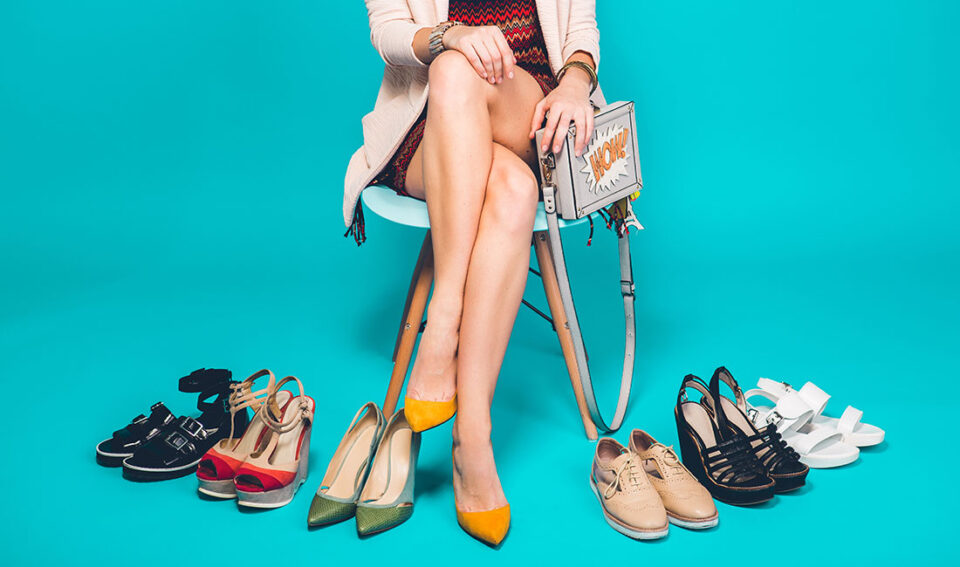
To price your shoes for profit, start with the true landed cost, then add the right markup for your sales channel. Landed cost includes factory cost, materials, labor, packaging, freight, duties, tariffs, samples, returns, and other hidden fees.
This guide explains shoe pricing in a clear and practical way. It covers cost-plus pricing, value-based pricing, wholesale pricing, DTC pricing, MOQ, retail markup, and profit margins.
Written from a footwear costing and sourcing perspective, it helps new shoe brands avoid underpricing, protect margins, and set prices that match product quality, market position, and long-term business goals.
Why Do Most New Shoe Brands Fail at Pricing?
Most new shoe brands fail at pricing because they rely on gut feeling or competitor mimicry instead of calculating true landed costs. Underpricing erodes margins and signals low quality, while overpricing creates dead inventory — both paths lead to unsustainable business models.
Underpricing damages more than margins — retailers question product quality, and there is no buffer left for marketing or markdowns. Overpricing leads to unsold stock that eventually requires deep discounting, training customers to never pay full price.
Factories that offer full-service support — from design CAD and sourcing to quality control and shipping — help founders engineer their target price into the product from day one, rather than discovering cost problems after production.
What Costs Should You Include Before Setting a Shoe Price?
Before setting a shoe price, include direct costs (materials, labor, tooling, packaging), landed costs (freight, duties, tariffs, customs brokerage), and hidden costs (samples, QC rejects, size-run minimums, returns allowance). Omitting any layer leads to margin leakage that compounds with every order.
The following table breaks down the three cost layers every brand must calculate before applying markup:
| Cost Layer | Components | Commonly Overlooked |
| Direct Production | Materials, labor, tooling/molds, packaging | Rarely — but often underestimated |
| Landed Costs | Freight, customs duties, brokerage | Yes — especially tariff variability |
| Hidden Costs | Samples, QC rejects, size-run minimums, return allowance | Almost always |
Manufacturing location significantly affects cost. Sourcing from China offers the lowest unit cost with strong scalability, while European factories carry higher prices but support specific origin narratives. Currency fluctuations add further risk — a brand purchasing in RMB and selling in USD can see margins shift 3–5% on exchange rate movement alone. For a deeper breakdown of how materials, labor, and location shape per-pair shoe cost, brands can map each variable before applying any markup.
How Do You Calculate a Profitable Retail Price From Factory Cost?
To calculate a profitable retail price, apply a 2.2x to 2.8x multiplier to the landed cost for DTC sales, or use keystone markup (2x) for wholesale channels. A shoe with a $40 landed cost should retail between $88 and $150 depending on channel and positioning.
The Standard Markup Chain: FOB → Wholesale → Retail
The footwear industry follows a relatively consistent markup chain:
- FOB (Factory) Price — the cost a brand pays the manufacturer per pair, excluding shipping and duties.
- Landed Cost — FOB + freight + duties + brokerage. This is the brand’s true cost per pair.
- Wholesale Price — landed cost × 2.0–2.2x. This is what retailers pay.
- Retail Price — wholesale price × 2.0–2.5x. This is what the end consumer pays.
Worked Example: Women’s Heeled Sandal
This example assumes a combined freight and duty rate of 35%, a mid-range scenario for leather footwear shipped to the US. Actual rates vary by material and shipping method.
The following uses a heeled sandal produced through an OEM partner:
| Stage | Calculation | Price |
| FOB price | — | $28 |
| Freight + duties (35%) | $28 × 1.35 | $37.80 |
| Wholesale price (2.2x) | $37.80 × 2.2 | $83.16 |
| Suggested retail (2.5x) | $83.16 × 2.5 | $207.90 |
| DTC retail (2.8x landed) | $37.80 × 2.8 | $105.84 |
A DTC-only brand can price at $106 with healthy margins, while wholesale requires a $208 retail to keep every party profitable.
Which Pricing Strategy Works Best for Footwear Brands?
The best pricing strategy depends on brand maturity and channel mix. Cost-plus suits launch-stage brands. Value-based suits premium positioning. Penetration pricing accelerates market entry, while skimming maximizes early revenue on exclusive designs.
Five core strategies and when each applies:
- Cost-plus — fixed percentage on landed cost. Simple but ignores willingness to pay.
- Value-based — price on perceived worth. Craftsmanship and materials justify premiums.
- Competitive — benchmark against rivals. Useful but dangerous as a race to the bottom.
- Penetration — low launch price to build volume, then increase. Risky without capital reserves.
- Skimming — high initial price on limited-edition styles, then gradually reduce.
Psychological pricing also matters. Charm pricing ($129 vs. $130) and anchoring (showing a “compare at” price) consistently lift conversion rates.
How Does Your Price Position Your Shoe Brand in the Market?
A brand’s price tells consumers whether shoes are value, contemporary, premium, or luxury before they evaluate quality. Misaligned pricing — premium materials at budget prices — confuses buyers and weakens brand equity.
The four standard footwear price tiers:
| Tier | Retail Range | Target Customer |
| Value | $20–$60 | Price-sensitive, high volume |
| Contemporary | $60–$150 | Style-conscious, mid-market |
| Premium | $150–$400 | Quality-driven, brand-loyal |
| Luxury | $400+ | Status-driven, aspirational |
Why Private-Label Footwear Delivers Higher Margins
Developing a private-label line through an OEM/ODM partner — rather than purchasing from branded wholesalers for resale — typically yields 10–20 percentage points higher gross margins, because the brand controls design, materials, and narrative while eliminating middleman markups — precisely the model Joes Footwear’s OEM/ODM services are built to support.
How Does Your Sales Channel Change Your Pricing Math?
Sales channels fundamentally alter margins. A shoe costing $30 to produce yields 75–80% gross margin through DTC at $150, but only 30–50% at a $75 wholesale price. Marketplace fees (10–20%) compress margins further.
Key channel differences:
- DTC e-commerce — highest margin (60–80%), but requires customer acquisition investment.
- Wholesale to retailers — lower margin (30–50%), but volume and exposure. Joes Footwear ships to brands across the US, UK, and Australia.
- Marketplace platforms — fees of 10–20% can erase thin margins. Better suited for liquidation than primary sales.
How Do Order Volume and MOQ Affect Your Per-Unit Cost?
Higher order volumes reduce per-unit cost through economies of scale in procurement, tooling amortization, and line efficiency. Negotiating flexible MOQs during the launch phase lets smaller brands access competitive pricing without overcommitting capital.
Factories offering lower minimums — even at slightly higher unit cost — reduce first-run risk. As sales validate demand, subsequent orders scale to unlock better pricing. Brands can request a quote from Joes Footwear to explore volume tiers.
What Profit Margins Are Realistic in the Shoe Industry?
Footwear brands typically achieve gross margins of 40–60% and net margins of 5–15%. Premium and sustainable brands can exceed 20% net margin. Women’s fashion footwear — including heels and sandals — typically achieves 55–65% gross margin, while DTC brands can reach 60–80%.
Knowing benchmarks prevents underpricing out of fear or overestimating returns. Brands with sustainability certifications like GMC compliance can use credentials to justify premium pricing.
What Are the Most Common Pricing Mistakes in Footwear?
The most common mistakes include ignoring return rates, failing to build promotional headroom, never revisiting prices, and competing on price alone without differentiation.
- Ignoring return rates — a 15% return rate makes 15% of revenue phantom.
- No promotional headroom — no room for 20–30% sales means every promotion destroys margin.
- Sample-to-bulk cost gap — a $50 sample does not mean $50 at bulk. The gap surprises unprepared brands.
- Price-only competition — without design or brand differentiation, this is always a losing strategy.

When and How Should You Adjust Your Shoe Prices?
Adjust prices when material costs shift, seasonal markdowns require planned reductions, or A/B testing reveals untapped elasticity. Proactive, calendar-driven adjustments outperform reactive discounting.
Plan markdowns into the annual calendar from the start. Test whether a $10 DTC price increase affects conversion — often it does not. When input costs rise, either renegotiate with the manufacturer or reposition upward. A loss leader strategy on one high-visibility style can also drive traffic to higher-margin products.
How Does Partnering With the Right Manufacturer Lower Your Pricing Risk?
The right manufacturing partner reduces pricing risk through transparent cost engineering, flexible MOQs, certified quality control, and full-service logistics that eliminate hidden cost surprises.
A manufacturer providing end-to-end services — design, sourcing, engineering, QC, production, and shipping — gives founders a single point of accountability. This eliminates coordination gaps where costs typically hide.
FAQs
What is the average markup on shoes from manufacturer to retail?
Approximately 2x from manufacturer to wholesale, and another 2–2.5x from wholesale to retail. A shoe produced for $30 typically wholesales at $60–75 and retails at $120–180.
How much does it cost to start a shoe line?
A small-scale shoe line launch can require $20,000-75,000 or more depending on scope, covering design, sampling, initial production, packaging, and marketing. Partnering with a full-service OEM/ODM manufacturer helps control the production portion of this budget.
What is a good profit margin for a shoe brand?
Target 50–65% gross and 10–15% net. DTC brands can reach 75–80% gross, while wholesale-dependent brands operate at 30–50%.
Should I price based on cost or perceived value?
Both. Cost-plus sets the floor; value-based sets the ceiling — the maximum price customers will pay based on design, materials, and brand story.
How do tariffs and import duties affect shoe pricing?
US tariffs on leather footwear typically range from 8% to 37.5%, and up to 48% for certain leather categories. These must be included in landed cost before markup, or they silently erode every pair’s margin.
What is the difference between OEM and ODM in shoe manufacturing?
OEM produces shoes to the brand’s exact design. ODM offers existing designs for customization. Joes Footwear offers both, with ODM providing faster time-to-market for new brands.