
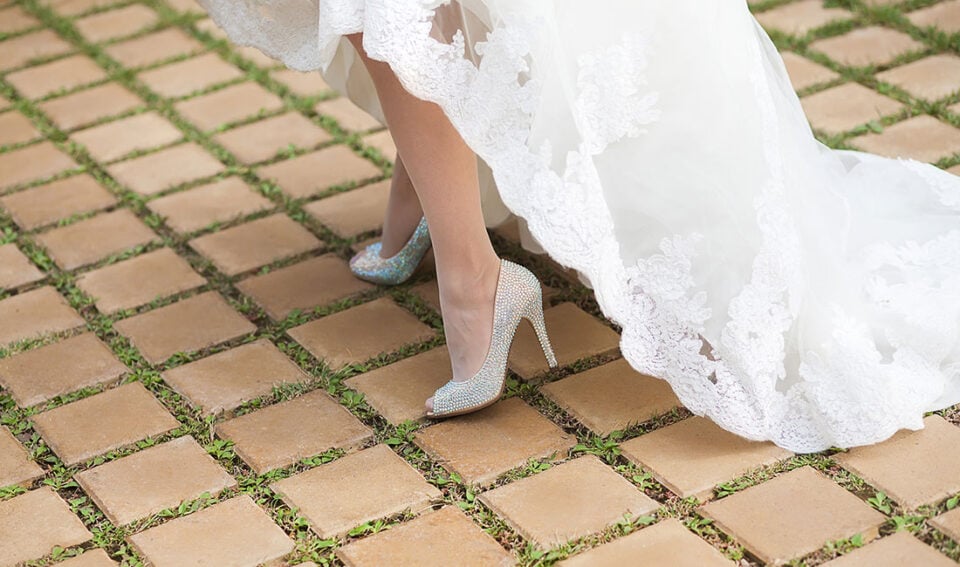
Choosing wedding shoes depends on four main factors: fit, venue, dress, and comfort. The right pair should match the bride’s foot shape, support long hours of standing and dancing, work on the venue surface, and suit the dress hem and style.
Drawing on footwear fit principles and bridal shoe design experience, this guide explains how brides can compare heel height, toe box shape, arch support, outsole grip, upper material, and shoe accessories.
It also covers indoor, outdoor, beach, and mixed venues, plus common mistakes to avoid before fittings and the wedding day. The goal is to help brides choose wedding shoes that look appropriate and feel stable through the full event.
Fit — How Should Foot Shape and Size Influence Your Choice?
Fit is where every smart shoe decision begins, and the broader principles of how shoes should actually fit the foot apply doubly when you will be on your feet for an entire wedding day. Each variable maps to a specific shoe feature covered below.
Sizing Pitfalls
Sizing pitfalls are the measurement errors that cause wedding-day blisters and cramping. Measure both feet and fit the shoe to the larger foot, since foot asymmetry is common in adults; fitting to the larger foot is the standard recommendation from foot-health professionals. Fit shoes in the late afternoon, because foot volume can increase by roughly 3–5% between morning and late afternoon. Skipping these two steps is the most common cause of post-ceremony discomfort.
Partner Height
Partner height sets an upper limit on heel height when the couple wants a proportional photo line. Decide the target heel height before the first dress fitting, because the seamstress hems the gown to that height. Any heel-height change greater than roughly half an inch (≈12mm) usually requires a re-hem.
Arch Type and Toe Box Shape
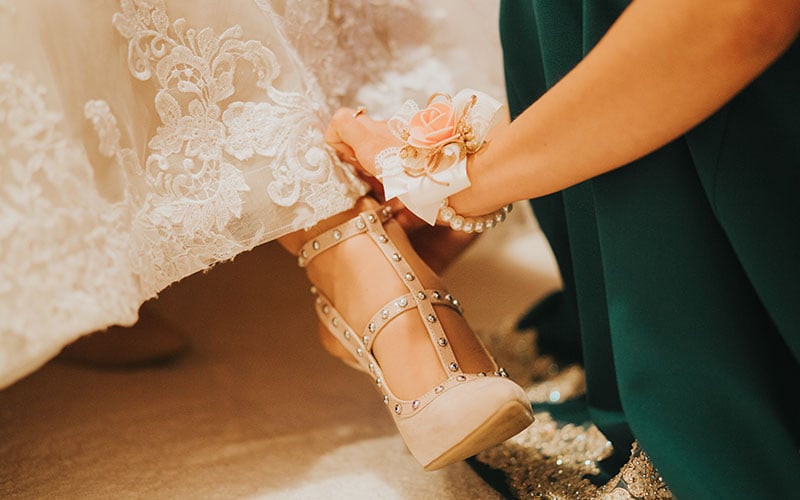
Arch type and toe box shape determine support and forefoot pressure. High arches need a contoured insole or shank; flat feet need a structured footbed to prevent overpronation. Toe box shape should match forefoot width: pointed toes suit narrow feet, almond toes fit medium widths, and round toes accommodate wider feet. Matching arch and toe box to the foot reduces pressure points during long standing periods.
Closed-Toe vs. Open-Toe
Closed-toe and open-toe differ in coverage, friction, and temperature regulation, with climate and venue setting the main constraint. The following table summarizes when each option works best:
| Factor | Closed-Toe | Open-Toe |
| Climate | Cooler weather, winter weddings | Warm weather, summer weddings |
| Formality | Black-tie, traditional ceremonies | Garden parties, beach weddings |
| Comfort | More protection, less friction | More airflow, cooler feel |
| Dress pairing | Floor-length gowns, classic looks | Tea-length, bohemian styles |
Venue — What Type of Shoes Work Best for Each Wedding Venue?
Venue type sets which outsole material, heel base width, and traction pattern will function on the walking surface. Hard floors, grass, sand, and gravel each demand different features. The sections below list the shoe-to-surface matches.
Indoor Venues
Ballrooms, churches, and hotels have hard, smooth floors. Stilettos, classic pumps, and leather-soled heels work well in these settings. However, marble and tile can be slippery. A rubber sole or textured outsole adds grip without changing the look.
Outdoor Venues
Outdoor venues on grass, sand, or gravel require a wider base to prevent heel sinkage. Block heels (25mm base or wider), wedges, and flats distribute load across the whole outsole. Thin stilettos under 10mm at the tip will sink into soft turf and wet sand. For grass ceremonies, heel caps or grass protectors are a low-cost alternative.
Mixed Venues
Mixed venues are weddings that move between indoor and outdoor spaces within one day. The practical solution is a two-shoe plan: a heel for the ceremony and photos, and a cushioned flat or block heel for the reception. Keep the second pair in a labeled bag with the wedding coordinator.
Weather Contingency
Weather contingency is the backup plan for rain, mud, or cold that would damage the primary shoes. A waterproof-treated leather boot or a second shoe in a sealed bag is the standard backup for wet outdoor portraits. Check the 7-day forecast at the two-week mark and finalize the contingency then.
Dress — How Do You Match Shoes to Your Wedding Dress Style?
Matching shoes to a wedding dress means aligning three variables: hemline versus heel height, color and material compatibility, and gown silhouette versus shoe profile. Each is fixed before the final dress fitting. The sections below give the pairing rules.
Hemline and Heel Height
Hemline and heel height determine how the gown falls and whether the shoe is visible. Floor-length gowns hide the shoe but fix the hem length to the chosen heel. Tea-length and midi dresses expose the shoe, so the shoe becomes part of the visible outfit. Bring the actual wedding shoes to the first hem fitting to avoid a re-alteration.
Color and Material Coordination
Color and material coordination is the process of matching shoe shade and fabric finish to the gown. White, ivory, champagne, and nude each sit on a different warm-cool axis. Hold the shoe against the gown in daylight and under the venue’s lighting before the final purchase.
The following list covers common material pairings that work well together:
- Satin shoes pair with silk and mikado gowns because the surfaces sit within the same smoothness range.
- Lace shoes pair with lace or tulle dresses because the open textures visually align.
- Leather shoes pair with crepe or smooth minimalist gowns because the matte leather finish echoes the fabric’s understated surface.
- Metallic or embellished shoes provide visual contrast against plain fabrics without pattern clash.
Some brides use a blue element on the shoe—sole, heel, or embroidery—as the traditional “something blue.” A blue detail under 10% of the shoe surface keeps the color palette intact.
Silhouette Pairing
Silhouette pairing matches gown shape to shoe profile based on proportion and exposed shoe area. The chart below lists the common pairings:
- A-line / Ball gown → Classic pump, concealed platform, or flat with ornament
- Mermaid / Fit-and-flare → Pointed-toe stiletto, slingback, or low sandal
- Sheath / Column → Strappy sandal or thin-heeled minimal design
- Bohemian / Relaxed → Flat sandal, platform wedge sandal, or mule
- Jumpsuit / Pantsuit → Block-heel bootie, loafer, or wedding sneaker
Comfort — What Makes a Wedding Shoe Comfortable Enough for an Entire Day?
All-day wedding comfort is the shoe’s ability to support the foot for 8–12 hours of standing, walking, and dancing without pain. Four design elements determine it: cushioning, heel height, internal structure, and upper material.
Cushioning and Insole Technology
Cushioning and insole technology refer to the layered materials between the foot and outsole that absorb impact. Effective wedding shoes include a padded footbed, engineered arch contour from last shaping, and a resilient midsole layer. These cushioning layers should be integrated during factory assembly—cemented or stitched into the footbed before final lasting—rather than inserted as removable aftermarket pads. Factory-integrated cushioning is calibrated to the shoe’s last and outsole, while aftermarket pads can’t substitute for core construction and shift position during wear.
Heel Height and Weight Distribution
Heel height and weight distribution describe how the shoe transfers body weight between the forefoot and heel. Block heels distribute weight across a larger base than stilettos of the same height, reducing forefoot load over long standing periods. A hidden platform of 10–20mm lowers the effective heel angle while keeping the visible height. The shank—a stiff strip between insole and outsole—holds the midfoot and limits fatigue over long hours.
Material Selection
Material selection affects ventilation, moisture handling, and skin friction. Leather linings absorb more moisture than synthetic linings. Mesh or perforated linings provide better airflow in summer heat. Uppers in soft full-grain leather or fine suede flex with the foot and reduce rubbing against the skin. Padded straps and recessed hardware prevent pressure points at the ankle and instep.
Shoe Accessories
Shoe accessories are small add-ons that adjust fit, grip, or friction after the shoe is purchased. The four most useful are:
- Gel forefoot pads: cushion the ball of the foot, 2–4mm thick
- Heel grips: tighten a loose heel counter and prevent back slippage
- Anti-slip sole stickers: add rubber traction to smooth leather soles
- Blister prevention patches: applied to friction-prone skin before wearing
What are the Common Mistakes to Avoid?
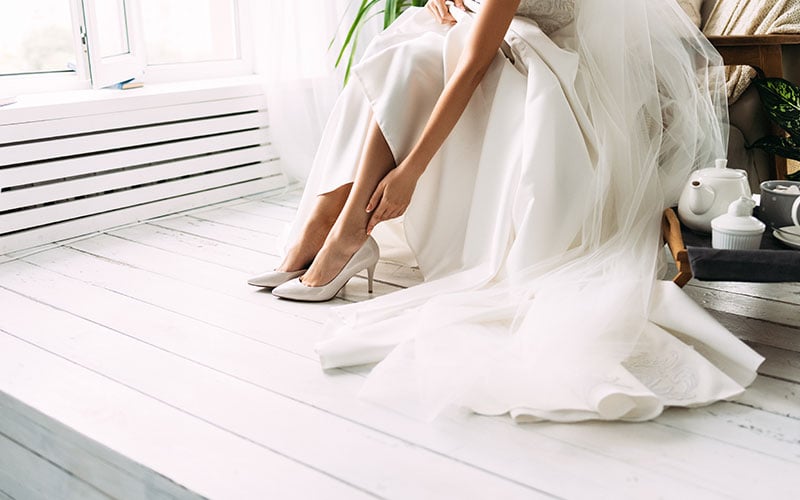
Common wedding-shoe mistakes are five avoidable errors that cause pain, fit problems, or dress-length issues. They are listed below with the specific correction:
- Buying too late. Shoes should be purchased at least 8 to 12 weeks before the wedding. This allows time for break-in and dress alterations.
- Skipping the break-in. New shoes need to be worn around the house for several short sessions. Walking on carpeted floors with thick socks softens the material gradually.
- Ignoring the venue surface. A stiletto tip under 10mm will sink into grass, gravel, and wet sand. Match outsole base width to the walking surface.
- Forgetting to bring shoes to fittings. The seamstress needs the exact shoe height to hem the dress correctly. Without it, the gown may drag or sit too high.
- Choosing style over comfort with no backup. If the primary shoe is not wearable for more than 3–4 hours in practice sessions, bring a second pair for the reception.
FAQs
When should a bride start shopping for wedding shoes?
Ideally, 8 to 12 weeks before the wedding. This gives enough time to order the right size, break them in at home, and bring them to dress fittings for hemline adjustments.
Can a bride wear flat shoes to her wedding?
Yes. Flats are a perfectly appropriate choice, especially for outdoor venues, beach ceremonies, or brides who prefer comfort. Bridal flats are available with satin uppers, pearl embellishments, and decorative straps, which meet most formal dress codes.
How do you break in wedding shoes without damaging them?
Wear them indoors on carpeted floors for 15 to 30 minutes at a time over several days. Thick socks help stretch the material gently. Avoid wearing them outside before the wedding to keep the soles clean.
Is it okay to switch shoes during the wedding?
Absolutely. Many brides wear heels for the ceremony and photos, then change into flats or lower heels for the reception and dancing. If planning a switch, use the ceremony shoes for dress alterations.
Should wedding shoes match the dress exactly?
Not necessarily. The shoe should complement the dress, not create a mismatch. Nude, champagne, and metallic tones work with many gown shades. The most important test is holding the shoe against the fabric under the actual venue lighting.
What shoes work best for a beach wedding?
Block-heel sandals, wedges, and embellished flats are the best options for sand. Flat thong sandals with rubber or cork outsoles offer better traction on sand than a pin-heeled shoe and more protection than going barefoot. Thin stilettos should be avoided — they sink into soft ground.