
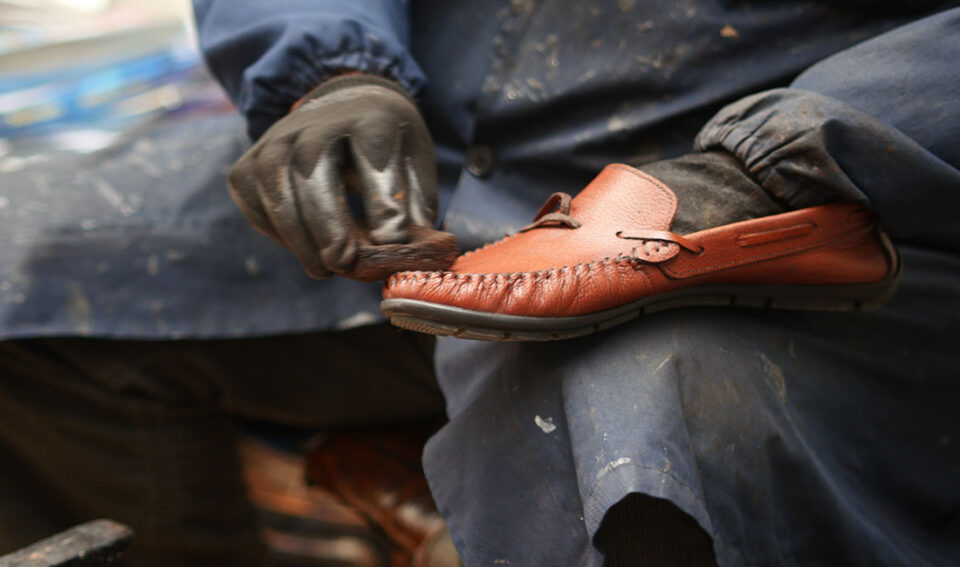
Loafers should fit snugly across the heel and instep, leave about a thumb’s width of toe room, and feel secure around the ball of the foot without pinching.
This guide explains how loafers should fit based on standard footwear fitting principles and practical fit checks. It covers how much heel slip is normal, how to assess toe box space, how width affects comfort, and when tightness indicates the wrong size or last shape. Because loafers have no laces or adjustable closures, small fit errors can lead to blisters, heel slippage, and arch discomfort. The guide also outlines break-in expectations and key signs that a different size may be needed.
How Should Loafers Fit?
Loafers should fit snugly around the foot without causing pain. The shoe needs to hug the sides of the foot and grip the heel firmly enough to prevent it from sliding out while walking.
Proper loafer fit requires:
- The ball of the foot aligns with the widest part of the shoe
- Snug fit around the sides and heel
- About 3/8 to 1/2 inch of space between the longest toe and the front of the shoe
- No painful pressure points anywhere on the foot
Many loafer wearers may need a closer fit than they use in sneakers, but the right size depends on the brand, last shape, foot width, and instep height.
Leather loafers may soften slightly across the width and instep with wear, but they should still feel comfortable from the start.
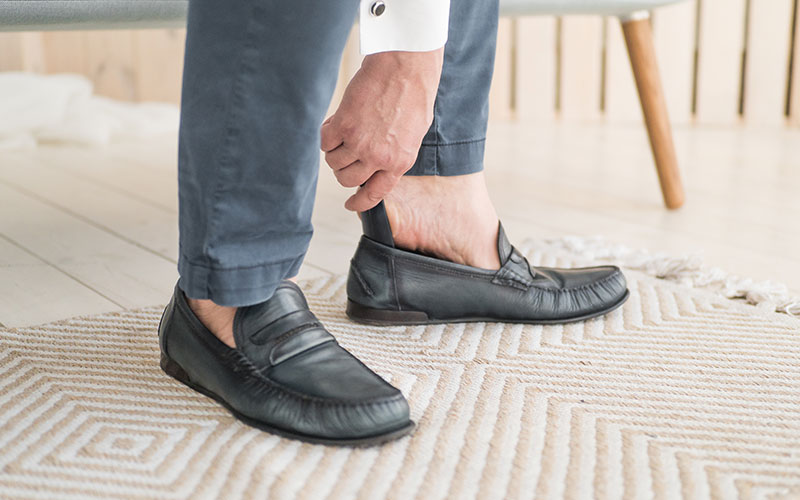
The heel should stay in place during normal walking. Minor heel lift may happen in seated or flexed positions, but the heel should stay secure during normal walking. This does not mean the loafer fits incorrectly.
Fit varies based on sock choice:
| Wear Style | Sizing Approach |
| No socks | Check heel security carefully, as the fit may feel looser |
| Thin dress socks | Use as the regular fit-check condition if they are worn often |
| Thicker socks | May require slightly more volume across the instep and forefoot |
Loafers that fit correctly feel like a snug glove on day one. After break-in, the leather may soften and feel slightly more flexible across the foot. This creates the comfortable fit loafers are known for.
How Should Loafers Fit At The Heel?
The heel should feel snug but not tight when loafers are first put on. A small amount of heel lift may occur at first, but the heel should not slide out, feel unstable, or require toe gripping while walking.
What proper heel fit looks like:
- The back of the shoe cups the heel securely
- The heel stays in place when walking on flat ground
- Minor movement may reduce as the upper softens
- No rubbing or pressure points form at the heel counter
The heel fit may feel more secure as the leather softens slightly with wear. This usually happens gradually during the first several wears.
Signs a smaller size may be needed:
- The heel slides out when climbing stairs
- The shoe feels looser with each step
- A gap forms between the heel and the back of the shoe
- The toes need to grip to keep the shoe on
Getting measured with a professional foot-measuring device helps identify true heel-to-toe length. Many people wear the wrong size because they guess instead of measuring. Loafer sizing differs from sneaker sizing, so athletic shoe size may not match loafer size.
Loafers should be tested with the socks intended for regular wear. Wearing loafers without socks creates more heel slip than wearing them with thin dress socks. The fit should feel secure in both scenarios but will differ slightly based on sock thickness.
Should Loafers Feel Tight Or Loose?
Loafers should feel snug when new, not tight or loose. The shoe needs to grip the foot firmly without causing pain or pressure points.
A proper fit means the loafer holds the foot in place without laces. The sides should hug the ball of the foot. The heel should stay secure with minimal lifting.
Tight loafers cause these problems:
- Pinching across the toes
- Red marks on the sides
- Numbness in the forefoot
- Pain after 30 minutes of wear
Loose loafers create different issues:
- Heel slips out while walking
- Foot slides forward
- Unstable feeling with each step
- Blisters from friction
Leather loafers may loosen slightly across the width and instep after break-in, but the amount varies by material and construction. The break-in period varies by leather type, lining, and shoe structure.
Getting measured with a Brannock device provides accurate length and width numbers. This tool measures both feet while standing. Most people have one foot slightly larger than the other.
Loafer sizing differs from sneaker sizing. Some wearers may choose a different loafer size than their athletic shoe size, depending on the brand, last shape, and foot volume. The lack of laces requires a closer fit from the start.
The instep should feel secure but not restrictive. Toes need room to lie flat without curling. The widest part of the foot must align with the widest part of the shoe.
How Much Toe Room Should Loafers Have?
Loafers need about a thumb’s width of space between the longest toe and the shoe’s front edge. This equals roughly 0.4 to 0.5 inches of room.
The toes should lie completely flat inside the toe box. They should not curl, press against the front, or feel squeezed at the sides. A snug fit across the forefoot is normal, but the toes themselves need breathing room.
Signs of correct toe room:
- All toes rest flat without bending
- No pressure on the longest toe when standing
- The forefoot feels secure but not tight
- Toes can wiggle slightly when seated
Signs of incorrect toe room:
- Toes touch the front while standing
- Numbness or tingling in the toes
- Toes curl to fit inside the shoe
- Excessive space causes the foot to slide forward
Getting measured with a Brannock device helps determine accurate loafer sizing before purchase. This tool measures both foot length and width, which affects how much toe room works for each person.
Leather loafers may feel slightly firm in the toe box at first. The material softens and molds to the foot shape after a few wears. Synthetic materials typically maintain their original shape and do not stretch as much.
People with wider feet often need more horizontal toe room, not just length. Those with narrow feet may need less space overall to prevent sliding. Loafer sizing depends on both measurements to achieve the right toe room fit.
How Should Loafers Fit Across The Width And Instep?
Loafers should fit snugly across the width without creating pressure points. The shoe needs to hold the foot securely at the ball area and along the sides.
The ball of the foot must align with the widest part of the loafer. This placement prevents the shoe from pinching or allowing too much movement. A proper width fit means the sides of the loafer contact the foot without squeezing.
Width considerations:
- The shoe should not gap at the sides
- No pinching or pressure on the little toe
- The ball area must feel secure but not tight
- Leather loafers may soften slightly across the width, but length should not be expected to change
The instep is the area across the top of the foot. This section should feel secure without creating discomfort. A loafer that is too loose at the instep will cause the foot to slide forward.
Some loafer brands offer multiple width options, while others use standard-width sizing. A Brannock device measures both foot length and width accurately. Many people wear the wrong width because they only focus on length when sizing.
The instep may feel slightly more relaxed after break-in, depending on the leather and construction. Buyers should account for this when testing loafer sizing in the store. A slightly snug instep is better than one with excess space.
The width and instep work together to secure the foot. If either area fits incorrectly, the loafer will not stay in place during walking. Both measurements matter as much as the overall length.
How Can A Wearer Tell If Loafers Don’t Fit?
The feet often show that loafers do not fit through specific pain points and movement issues. Blisters on the heels or sides mean too much friction from a loose fit. Pinched toes or numbness signal a toe box that is too narrow or shallow.
Common signs of poor fit include:
- Excessive heel slip: The heel slides out, feels unstable, or requires toe gripping while walking.
- Toe crowding: The toes curl or press against the front of the shoe
- Top-of-foot pain: The vamp presses down and restricts circulation
- Arch discomfort: Pain appears in the midfoot after 30 minutes of wear
- Difficulty putting them on: The foot is hard to slip in or out of the shoe
The ball of the foot should align with the widest part of the shoe. If it does not, the loafer is the wrong size for that foot shape.
A properly sized loafer feels snug when new but never causes immediate pain. Some initial heel slip is normal during break-in, but the heel should not slide out completely when walking.
For people between sizes, measuring the feet with a Brannock device at a shoe store can help identify the best fit. This tool measures both length and width accurately. Loafer sizing differs from sneaker sizing because loafers lack adjustable closures.
Loafers should be tried with the socks intended for regular wear. Walking on hard surfaces gives a more accurate fit check than standing only on carpet. If rubbing or pressure points appear within the first five minutes, the fit is likely wrong.
FAQs
Is a little heel slip in loafers normal?
Yes, a little heel slip in new loafers is normal. The heel may lift slightly during the first few wears as the leather softens and molds to the foot. If the heel slips out, feels unstable, or requires toe gripping, the loafers are likely too large.
Should there be space at the toe of loafers?
Yes, loafers should have about a thumb’s width of space at the toe. This gives the toes enough room to move naturally while walking. If there is too much space, the foot may slide forward and cause heel friction.
How tight should loafers be across the foot?
Loafers should feel snug across the foot without pinching. The shoe should gently hug the ball of the foot while still allowing slight toe movement. If the leather feels strained or the foot bulges over the sole, the loafers are too narrow.
Are loafers supposed to be tight at first?
Loafers should feel snug at first, but not painful. Quality leather usually softens after several wears, but it should not cause numbness, red marks, or sharp pressure. If loafers hurt immediately, they are too tight.
Do loafers loosen up after breaking in?
Yes, leather loafers loosen slightly after breaking in. They usually stretch around the ball of the foot and vamp, but the heel area does not stretch much. If the heel slips when new, it will likely continue to slip later.