
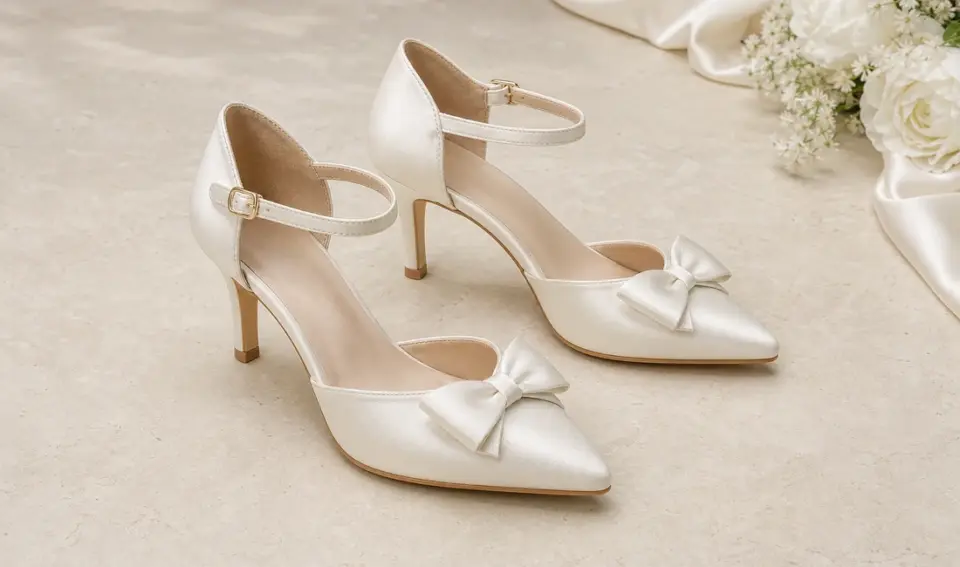
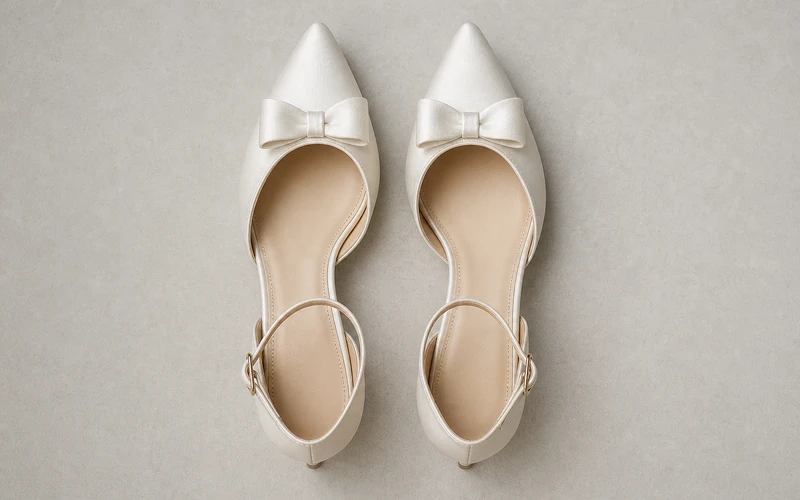
A bridal collection often starts with a visual idea: an ivory pump, a satin slingback, or a heel with a crystal bow. Turning that idea into a branded product needs a clear plan. The shoe needs to suit the target wearer, use suitable materials, and meet the agreed fit and finish requirements.
For a manufacturer, those decisions form the basis of development. This guide explains how brands can define a bridal heel project, choose an OEM or ODM route, review custom details, and confirm a physical sample. It also covers brand logos, optional wedding personalization, and the factors that affect cost and timing.
What Are Custom Bridal High Heels?
Custom bridal high heels are wedding shoes developed or adapted to a brand’s design, fit, material, and branding requirements. In a private-label project, the finished shoe carries the brand’s name or mark.
The starting point may be an original design or an existing style. A brand might develop a new pump from sketches or adapt a slingback with a different upper, color, trim, or logo. The supplier then reviews how those changes affect the shoe.
An existing wedding footwear collection can help a brand compare shapes and decorative details. The brief should identify which features to keep, change, or develop further.
What Should Brands Define Before Developing Custom Bridal High Heels?
Brands should define the target customer, visual direction, price range, intended use, and fit requirements before development begins. These choices help the supplier choose materials, parts, and ways to make the shoe.
A short, clear brief is a useful starting point. It should identify the features that matter most and the areas where the brand is open to suggestions.
Target Customer, Brand Style, and Price Range
The intended customer and brand style should guide the design. A minimal bridal label may favor clean lines and subtle trims. A brand known for statement footwear may place more weight on a sculpted heel or a large bow.
The target retail price can help frame cost discussions. Brands should also provide order assumptions, such as the number of styles, colorways, and pairs.
These details give the supplier a basis for discussing options. The final quote still depends on the agreed design, materials, and order conditions.
Wedding-Day Use, Venue, and Fit Requirements
The brief should describe how the shoe is expected to be worn. A ceremony-focused heel and a style intended for standing, walking, and reception use may need different features.
The venue also matters. Brands targeting indoor weddings and those targeting garden events should discuss the heel base, outsole, and intended walking surfaces with the supplier.
Fit requirements should include the sample size, sizing system, and target customer. Any width or fitting needs should be stated early so the team can review them against the proposed last and construction.
OEM or ODM: Which Development Route Fits the Bridal Project?
The choice between OEM and ODM depends on whether a brand brings a new design or plans to adapt an existing style. OEM development typically starts from brand-supplied sketches or specifications. ODM development typically starts from a supplier’s existing design, with proposed changes reviewed against the brand brief.
| Development route | Starting point | Main discussion points |
| OEM | The brand’s design or specifications | Design details, last and pattern needs, materials, components, and sample requirements |
| ODM | An existing design selected as a base | Changes to color, upper material, heel, trim, and branding, subject to review |
An adapted design still needs checks. Changing a heel, strap, or upper material can affect other parts of the shoe. For private-label high heel development, the brand and supplier should agree on the starting design and the changes required before sampling.
Which Bridal Heel Design Details Can Be Customized?
Brands can discuss changes to the shoe’s shape, heel, upper, color, decoration, and branding. The supplier should review these choices together because a change in one area may affect fit, construction, or cost.
The aim is to define a style that reflects the brand and can be made to the agreed specification.
Silhouette, Toe Shape, and Heel Design
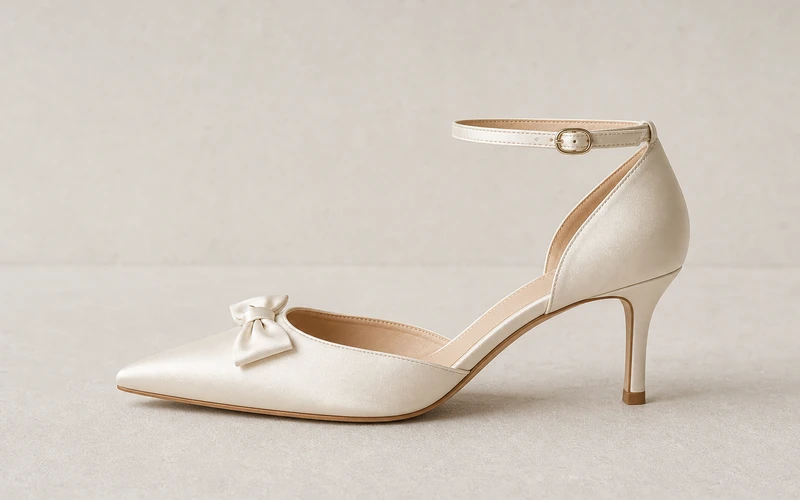
The silhouette sets the overall look. A closed-toe pump and a slingback, for example, create different lines and levels of foot coverage. Toe shape, side openings, and strap placement further define the style.
Heel decisions should include height, shape, finish, and proportion. The heel needs to work with the last and the planned construction. Changing its height should prompt a review of the whole shoe.
The brand should explain which features matter most. This helps the team discuss practical alternatives without losing the intended design.
Upper Materials, Colors, and Embellishments
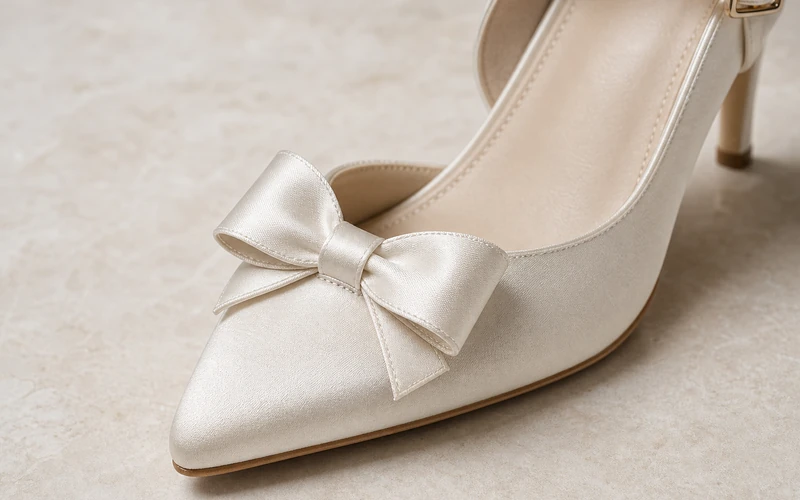
Material choices affect appearance, structure, and handling. Satin, leather, and decorative fabrics should be reviewed as physical samples so the brand can assess their texture, color, and finish.
Bows, pearl details, and crystal trims provide different options for a bridal design. Their size, weight, and position should suit the shoe’s shape and construction.
Light shades should be checked against an agreed color reference. A white or ivory material may look different under different lighting.
Trim details should also be recorded. The brief should define the size, position, color, and attachment of items such as bows, buckles, and crystal trims.
How Can Brands Balance Bridal Style With Fit and Comfort?
Fit and comfort depend on how the last, heel, upper, lining, and padding work together. A visual design alone cannot confirm how the shoe will feel during wear.
Brands should agree on the test size and fitting method, then use sample feedback to refine the relevant details.
Last Shape, Toe Space, and Heel Support
A shoe last is the shaped form used to develop and make the shoe. It influences proportions and the space available for the foot.
Toe appearance and usable toe space should be reviewed together. A pointed-toe style needs both the intended look and a fit that suits the target customer.
Heel support should also be assessed on the physical pair. The review can record heel movement, foot position, and how securely the upper holds the foot during walking. Specific observations give the team clearer guidance than a general comment about comfort.
Straps, Lining, and Cushioning
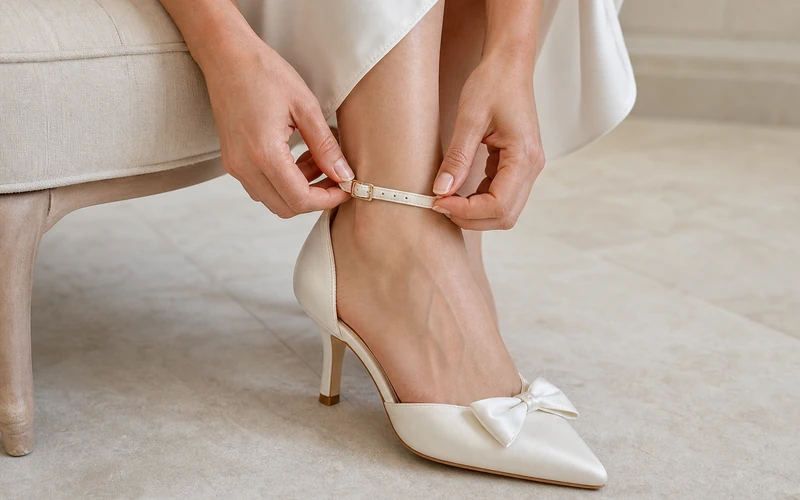
Straps should be checked for position, length, adjustment, and pressure. A strap that looks correct in a drawing may need changes once the shoe is worn.
Lining and cushioning should be assessed with the rest of the construction. Changes to padding can affect the space inside the shoe, so the fit should be checked again after such changes.
The fitting record should state the sample size, wearer, activities, and trial duration. It should also identify where pressure, rubbing, or unwanted movement occurs. This makes feedback easier to compare between sample versions.
Private-Label Branding and Optional Wedding Personalization
Private-label branding identifies the footwear brand. Wedding personalization adds project-specific details for a couple or event. Both need clear artwork and placement instructions.
The brand should decide how these details fit within the shoe before approving the final sample.
Brand Logos and Insole Details
The logo file, size, color, and position should be confirmed for the insole. The proposed marking method should also be reviewed with the supplier.
The layout should fit the space on the insole. If the layout includes both a logo and extra text, the brand should check their relative size and spacing.
The brand should review the physical sample or a proof of the artwork, depending on the stage. The final record should identify the version approved for production.
Initials and Wedding Dates for Promotional Projects
For promotional wedding-shoe projects, Joes Footwear offers optional insole details that combine a brand logo with a couple’s initials and wedding date. The layout and text are agreed as part of the project brief.
For example, a proposed layout might include a logo, “A & J,” and “12 June 2027.” The final layout should reflect the project’s branding and text requirements.
The brand should confirm spelling, date format, position, and the pairs to which the details apply. These checks help catch errors before the shoes are made.
How Are Custom Bridal High Heels Sampled and Approved?
Samples should confirm whether the bridal design works as a physical shoe. The review should cover shape, fit, materials, decoration, workmanship, and branding.
The team first turns the brief into a sample. It then records changes and confirms the final details.
Translate the Brief Into Drawings, Lasts, and Patterns
The development team uses the brief to prepare the technical information needed for sampling. This may include drawings, material references, component details, and measurements.
A tech pack records these requirements in one document. Patterns define the pieces used to make the upper, while the last helps establish the shoe’s shape and fit.
For a bridal style, decoration placement should be included in this work. A large bow or buckle may affect the upper layout and needs to be considered before assembly.
Review Fit, Finish, and Decorative Details
The physical sample should be reviewed for both wear and appearance. Fit checks should cover the agreed size, foot coverage, strap tension, and heel support.
For light-colored bridal shoes, visible stains, glue marks, wrinkles, and differences between the left and right shoe deserve close attention. Colors and material finish should be compared with the approved references.
Decorations should be checked for position and attachment. The review should also consider whether raised details may contact the foot or catch on dress fabric during movement. Marked photos can help explain any findings.
Confirm Revisions, Branding, and Production Specifications
Sample comments should be collected into one clear list. Each comment should identify the issue, its location, and the expected change.
After revisions, the brand should review the complete pair again. This helps confirm that a change to one part has not created a new issue elsewhere.
The final record should cover the approved sample, materials, heel, trims, size requirements, and branding artwork. Any remaining tests or checks should be listed, with a clear decision on when production may proceed.
What Affects the Cost and Timeline of Bridal Heel Development?
Cost and timing depend on the style, parts, materials, order size, and sample changes. An existing design with limited changes may involve different work from a new style requiring new components.
A useful quote should identify the factors that apply to the project.
| Project factor | What the brand should discuss |
| Last and heel requirements | Whether existing components can be used or new development is needed |
| Materials and colors | Availability, color matching, and any custom sourcing requirements |
| Decorative details | Attachment methods, handwork, and sample checks |
| Branding and personalization | Artwork, marking method, text variations, and approval steps |
| Order size and style mix | Quantities, colorways, sizes, and how the order is divided |
| Sample revisions | Review dates, required changes, and when specifications will be confirmed |
The schedule should separate sample development, brand review, final approval, and production. Brands working toward a wedding season or launch date should share that target early.
The brand and supplier should agree on dates for the actual project. Changes after approval may require further review and a revised plan.
FAQs About Private-Label Bridal High Heels
These questions address practical choices that may arise before a brand commits to development.
Can a Brand Start With Reference Photos Instead of a Full Tech Pack?
Yes, reference photos can help communicate a design direction. The brand should identify the features it wants to keep or change. Photos alone may leave materials, dimensions, and construction unclear, so the supplier will need further details before the specification can be confirmed.
Can Different Bridal Styles Share the Same Last or Heel?
They may be able to share components if the designs are compatible. The supplier should review toe shape, heel height, upper layout, and construction for each style. A shared heel height does not by itself confirm that the same last or heel can be used.
Is Single-Pair Personalization Available Through Private-Label Development?
Single-pair availability must be confirmed with the supplier. Private-label development is mainly a service for brand projects. Brands should ask about order quantities, sample charges, and personalization arrangements before treating an optional marking feature as a single-pair ordering service.
What Should Brands Confirm About Design Exclusivity?
Brands should ask whether the base design is shared and whether exclusive use can be agreed. Discussions should also cover any new last, heel, or tooling involved. The project terms should clearly record the scope of any agreed exclusivity.
Conclusion: Build a Bridal Heel That Fits the Brand and the Brief
A well-defined bridal heel project connects brand style with practical product requirements. The design, materials, fit, decoration, and branding should all be reviewed as parts of the same shoe.
Brands developing a bridal collection can share their design references, target customer, price range, and order needs with Joes Footwear. A clear brief helps the supplier assess the development route and propose a sample plan.