
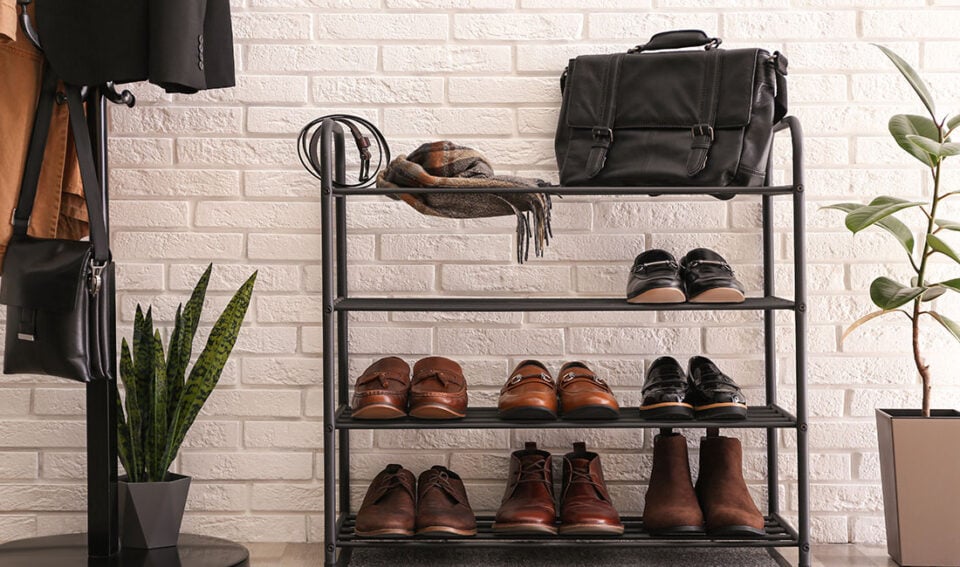
A complete men’s shoe wardrobe needs six pairs: a dress shoe, a loafer, a driving shoe, a casual leather shoe, a sneaker, and slides. Together they cover every adult occasion, from formal events to summer recovery.
This guide draws on our footwear team’s 200-plus hours of wear-testing across leather grades and construction methods. Each pair is judged on three filters: versatility, construction, and silhouette. Readers will learn which six pairs to own and how each handles one part of the formality spectrum.
The guide also compares Goodyear-welted quality against cemented budget builds. It shows how full-grain leather, correct fit, and rotation push lifespan past 15 years.
What Is an Essential Men’s Shoe Wardrobe?
An essential men’s shoe wardrobe is six leather and textile pairs covering formal, smart-casual, casual, and warm-weather occasions. Each pair must meet three filters to earn its place.
A shoe earns essential status when it passes all three filters below:
- Versatility: Works across at least two different settings.
- Construction: Lasts 5 to 15 years of regular wear.
- Silhouette: Stays current past 2035, not just past 2027.
A shoe that passes only one filter is a trend purchase, not a core piece. The six pairs in this guide each pass all three.
Which Six Pairs Make Up the Essential Men’s Shoe Wardrobe?
Six pairs cover every adult occasion: a dress shoe, a loafer, a driving shoe, a casual leather shoe, a sneaker, and a pair of slides. Each handles one section of the formality spectrum.
The table below maps each pair to its formality level and primary use case.
| Core Pair | Formality | Main Use |
| Dress Shoe | Formal | Suits, weddings, business |
| Loafer | Smart Business | Office, dinner, travel |
| Driving Shoe | Smart-Casual | Weekend, hybrid offices |
| Casual Leather Shoe | Casual-Polished | Smart denim, chinos |
| Sneaker | Casual | Daily wear, light commute |
| Slides | Warm-Weather | Pool, beach, recovery |
What Is a Men’s Dress Shoe and When Is It Required?
A men’s dress shoe is a leather lace-up built for formal occasions. The three core types are the Oxford, the Derby, and the Monk Strap. Each type signals a different formality level.
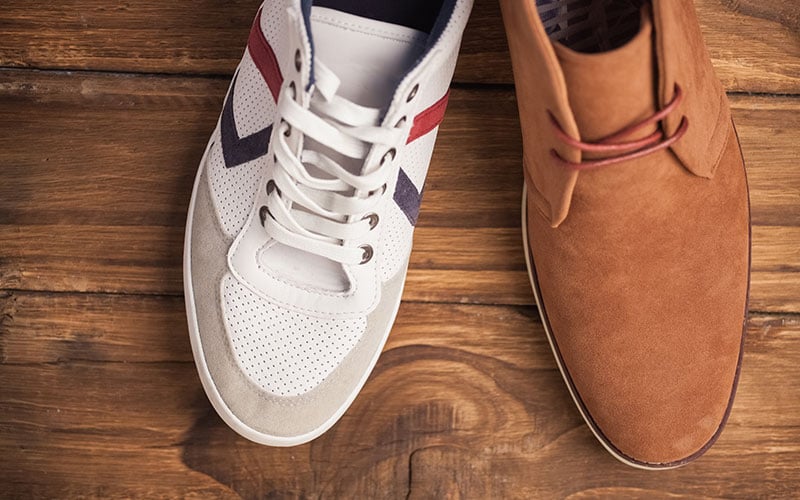
The three dress shoe types differ by lacing structure:
- Oxford — Closed lacing creates the most formal profile. Required for suits, weddings, and traditional business.
- Derby — Open lacing fits wider feet and is less formal. Works for business casual through tailored looks.
Monk Strap — Buckles replace laces. Looks modern and distinct.
Subtypes add finer formality control within each category. Cap-toe Oxfords are the standard formal choice. Wholecut Oxfords use a single piece of leather and look sharper. Wingtip brogues add perforated patterns and read business-casual.
Leather grade controls how the shoe ages. Box calf is the standard upper material and takes polish well. Patent leather is reserved for tuxedos and white-tie events. Shell cordovan costs 2 to 3 times more and lasts 20 years with regular care.
Dark brown should come before black for most men. Brown pairs with charcoal, navy, grey, and earth-tone suits. Black is needed mostly for black-tie events, funerals, and strict corporate dress codes.
What Is a Men’s Loafer and Which Style Fits Each Occasion?
A men’s loafer is a slip-on leather shoe without laces. It bridges dress and casual wear. The four main styles are penny, bit, tassel, and Belgian.
The four loafer styles signal different formality levels:
- Penny loafer: The most versatile. Works with suits down to denim.
- Bit loafer: A polished business choice. Softer than an Oxford.
- Tassel loafer: Traditional and slightly playful for smart-casual offices.
- Belgian loafer: Carries a small bow on the vamp. The dressiest of the four.
Suede forms a fifth seasonal variant. Suede loafers weigh less than leather and read more casual. They suit spring and autumn but stain in heavy rain.
Sole material controls the loafer’s formality. Leather soles look dressy and work in dry weather. Rubber soles add grip and look casual. A middle option uses a leather sole with rubber inserts at the heel.
Sock choice signals formality alongside the shoe. No-show socks read casual. Mid-calf socks in solid colors read business. Patterned socks shift toward creative dress codes and clash with strict offices.
What Is a Driving Shoe and Why Does It Belong in a Man’s Rotation?
A driving shoe is a moccasin-construction slip-on with rubber nubs extending up the heel. An Italian shoemaker introduced the design in 1963 for sports car drivers. The nubs gave drivers pedal grip without scuffing the upper.
The driving shoe is the most relaxed dress-adjacent option in a man’s closet today. Smooth leather lasts longer and looks dressier. Suede weighs less and looks more casual. Travel, hybrid office days, and weekend dinners suit the driving shoe better than dress shoes or sneakers.
The nub sole is the structural signature of the category. Rubber studs cover the entire heel and underside, not just a few points. Driving shoes built on flat rubber outsoles lose the original grip design and read like generic moccasins.
Construction is unlined or thinly lined. The shoe flexes easily but holds shape with use. Break-in takes 5 to 10 wears compared to 30 or more for a Goodyear-welted dress shoe.
Driving shoes do not handle heavy rain or cold ground. The thin sole offers limited insulation. A separate winter shoe stays necessary in climates below freezing.
What Is a Men’s Casual Leather Shoe and How Does It Differ From Sneakers?
A men’s casual leather shoe is a low-profile lace-up or slip-on in leather or suede. It sits between a dress shoe and a sneaker. The shoe delivers polish without formality.
Sneakers look athletic. Loafers look formal. The casual leather shoe fills the gap between them. Hybrid offices, gallery openings, casual dinners, and travel days all call for it. The strongest options use tumbled, pebbled, or oiled leather with rubber outsoles for grip.
Common subtypes include casual derbies, plain-toe bluchers, and unstructured slip-ons. Casual derbies use thicker leather and chunkier soles than dress derbies. Plain-toe bluchers skip decorative stitching for a cleaner look. Unstructured slip-ons remove the heel counter for a softer feel.
Color choice controls versatility. Dark brown works across the widest range of outfits. Black reads more formal and limits casual pairings. Tan and burgundy work with denim and chinos but clash with corporate looks.
Outsole material decides where the shoe can go. Rubber lugged soles handle rain and uneven ground. Smooth leather soles do not.
Which Sneaker Belongs in a Grown Man’s Wardrobe?
A grown man’s sneaker is a low-profile, clean-upper design in white, off-white, or muted tones. Court silhouettes work better than running silhouettes for adult wardrobes. The shoe should pair with raw denim and lightweight tailored trousers.
Simple designs work best. Chunky soles and bold logos shift the look toward athletic wear. A pair should retire when the midsole yellows or the upper holds permanent dirt.
Upper material matters as much as silhouette. Smooth leather looks the cleanest and ages well. Canvas is lighter and breathes better but stains easily. Mesh and knit uppers read athletic and limit dress-up potential.
Trouser pairings follow the silhouette rule. Slim or straight-leg jeans, chinos, and tapered trousers all work. Wide-leg pants drag and bunch over low-profile sneakers. Shorts pair only with low-top variants.
Care keeps white sneakers wearable longer. Brush off dirt weekly. Wipe the upper with a damp cloth. Treat new leather sneakers with a stain repellent before the first wear.
When Do Men Actually Need a Pair of Slides?
Slides belong in any wardrobe exposed to summer heat, pool decks, beaches, hotel rooms, or post-gym use. A leather pair works for hotel breakfasts, beach clubs, and weekend errands. Foam slides limit use to the locker room or shower.
Leather slides function as everyday wear. Foam slides do not. A leather slide pairs with shorts, swim trunks, and casual lounge outfits.
Construction separates the two tiers. Leather slides use stitched uppers and contoured footbeds. Foam slides use molded EVA with no support structure. The footbed difference makes leather slides comfortable for full-day wear and foam slides uncomfortable past 30 minutes.
Sizing differs from regular shoes. Slides fit best with a 2 to 5 millimeter overhang at heel and toe. A flush fit feels tight after walking. A heel that drops below the sole signals oversizing.
Care extends slide life by 2 to 3 years. Wipe leather slides after pool or beach use. Salt and chlorine dry out the upper. Condition the leather every 4 to 6 weeks to prevent cracking.
How Can a Man Tell if His Shoes Are Well Made?
Well-made men’s shoes show three markers. Construction allows resoling. Uppers use full-grain leather that develops patina. Edge finishing is clean and stitching is even.
The table below compares the three main shoe construction methods.
| Method | Resoleable? | Typical Lifespan | Best For |
| Goodyear Welt | Yes, many times | 15–25 years | Dress shoes, boots |
| Blake Stitch | Yes, fewer cycles | 8–15 years | Sleeker dress styles |
| Cemented (Glued) | No | 1–4 years | Sneakers, budget casual |
Leather grade matters as much as construction. Full-grain keeps the natural surface and ages with patina. Top-grain is sanded smooth for uniform looks. “Genuine leather” is the lowest qualifying grade.
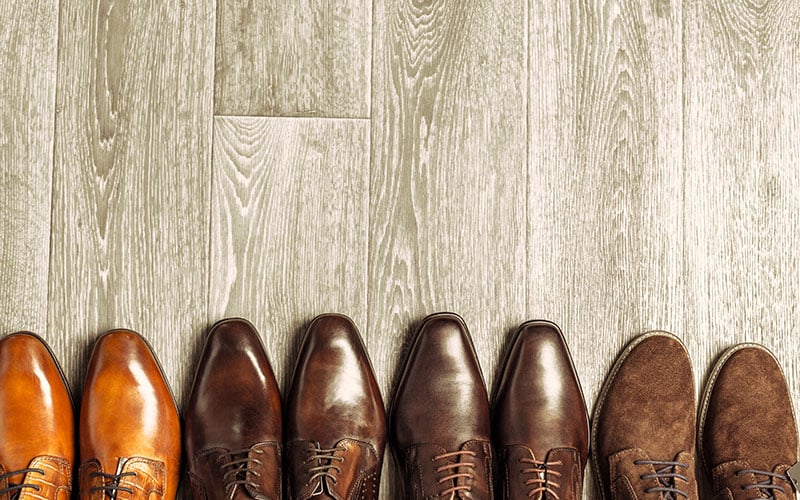
How Should Men’s Shoes Fit, Last, and Be Cared For?
Quality leather shoes should hold the heel firmly and leave a thumb’s width at the toe. The fit feels snug across the ball without pinching. Pain along the side is a fit failure, not break-in.
A simple four-step routine extends shoe life by years:
- Rest each pair 24 to 48 hours between wears so leather dries fully.
- Use cedar shoe trees to hold shape and absorb moisture.
- Brush after every wear and condition every 4 to 6 weeks.
- Resole before the welt is damaged, not after.
FAQs
Can a man wear loafers with a suit?
Yes. Penny and bit loafers in leather pair well with summer suits and creative business looks. They are too informal for black-tie events.
How often should dress shoes be polished?
Brush after every wear. Polish every 5 to 10 wears. Condition the leather every 4 to 6 weeks.
Are driving shoes safe to actually drive in?
Yes. The rubber nubs were designed for pedal feel and give better control than most casual shoes on short drives.
How many times can a Goodyear-welted shoe be resoled?
Most pairs handle 5 to 8 resoles before the welt itself needs work.
Should men match shoe color to belt color?
Yes, as a baseline rule. Brown shoes pair with a brown belt. Black shoes pair with black. Suede and casual outfits allow more flexibility.
How many pairs of dress shoes does a man need?
Two. A dark brown Derby or Oxford covers most business and smart-formal occasions. A black Oxford covers black-tie events, funerals, and strict corporate settings.